Here’s a closer look at the trucking industry statistics highlighting the significance of the backbone of America – truckers.
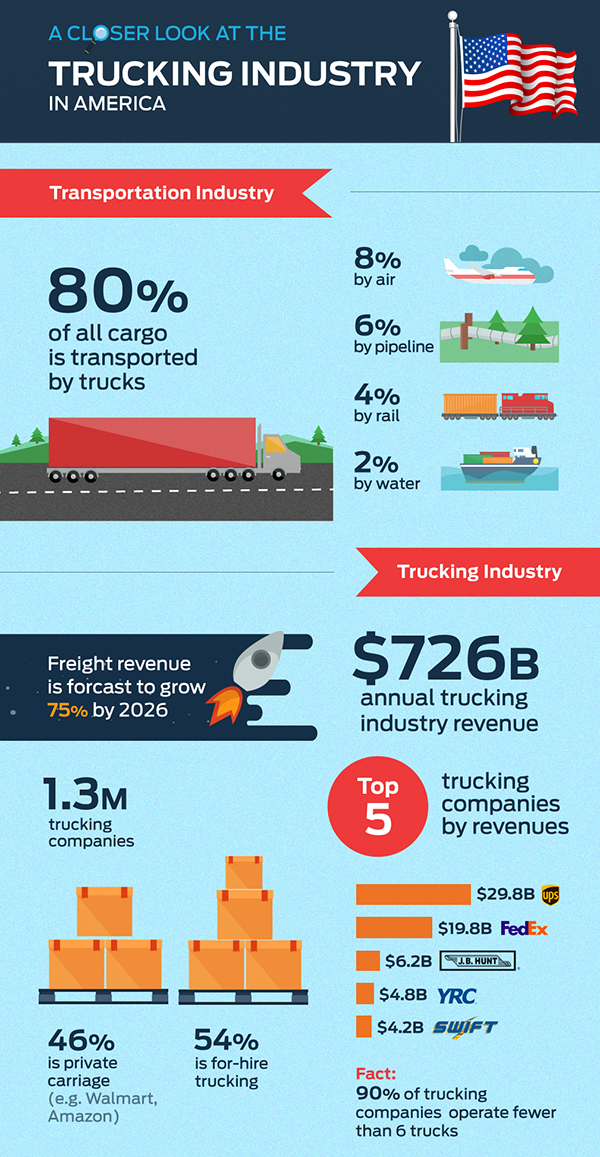
The trucking industry statistics are truly remarkable. It’s an industry topping $726.4 billion in revenue for 2015 and responsible for six percent of all jobs in America.
If you bought it, they brought it. Truck drivers keep America rolling by driving countless and lonely hours delivering the cargo we desire. Without trucks to ship things, those shelves would be mighty bare and those same-day delivering services from your online shopping wouldn’t be possible without truckers.
Don’t believe us? Check out the trucking industry statistics.
Merge onto any highway and you’ll see countless semi trucks heading in either direction of the road. Seems like they’re endless amounts of them right? You would be correct, in fact 80 percent of all cargo in the USA!
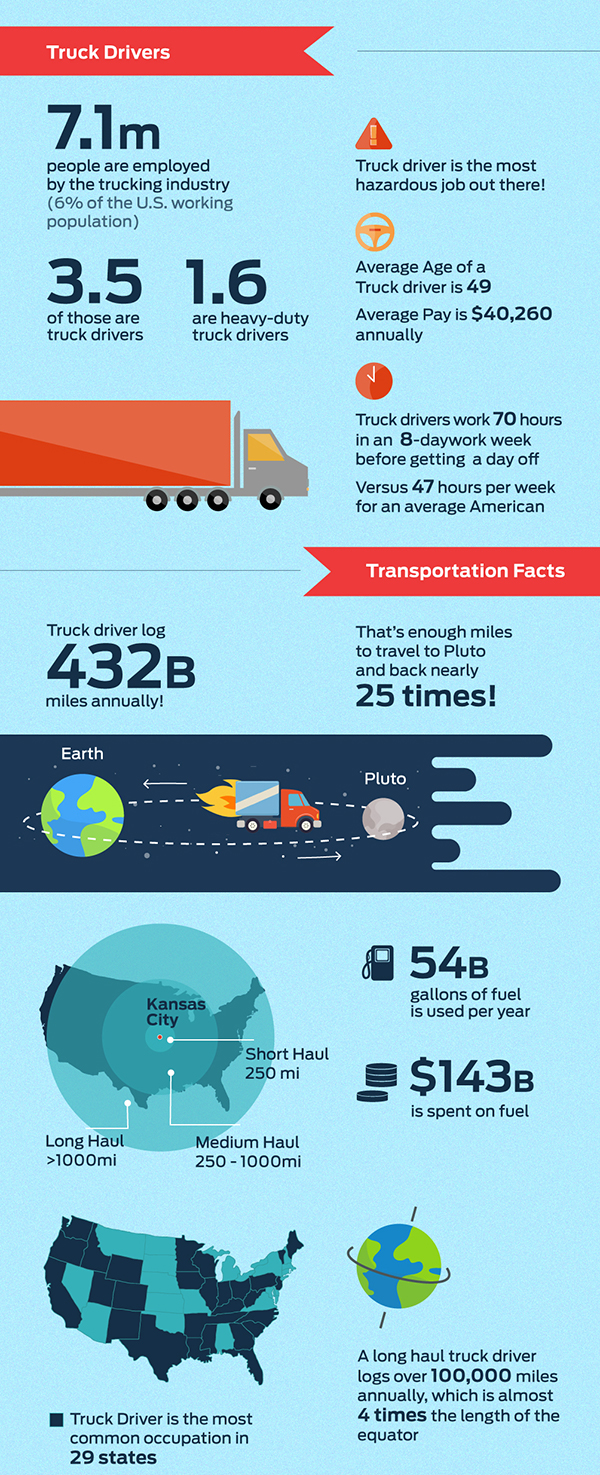
There are 3.5 million truck drivers in the trucking industry who put their life at risk delivering an array of commodities and goods. Drivers operate heavy-duty trucks with a load weighing as much as 80,000 pounds. In 2015, 852 truck drivers lost their life while working, making truck driver the most dangerous job in the USA. So remember to give truck drivers space and don’t tailgate.
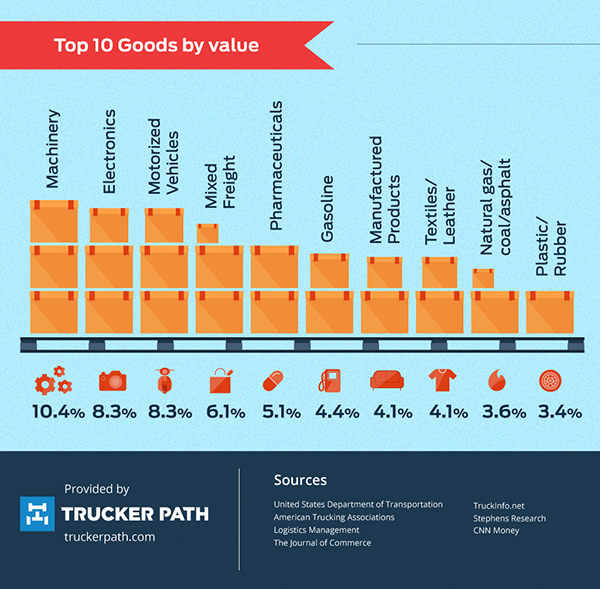
Truck drivers haul a variety of goods with machinery, electronic and motorized vehicles making up 27 percent of goods shipped by truck drivers in America. The most common thing trucks haul is machinery, followed by electronics and motorized vehicles. Additionally, mixed freight includes commodities such as food and restaurant supplies.
Let’s face it, without the trucking industry we wouldn’t be able to enjoy the things we have. Shelves would be empty and people would undoubtedly be in a state of panic if that happens. The trucking industry statistics don’t lie!





COVID19: State of Trucking <h4>By Trucker Path</h4>
<h3></h3>
<h3></h3>
<img src="https://truckerpath.com/uploads/2020/05/b5.png" alt="Trucker Path COVID19" />
<h3><strong>Trucker Path COVID-19 Initiatives</strong></h3>
The Trucker Path team is actively monitoring the spread of the Coronavirus (COVID-19) and preparing resources to assist truckers as they help keep America running.
<h2></h2>
In addition to providing updates on the Trucker Path <a href="https://www.facebook.com/TruckerPath/">Facebook Page</a>, a dedicated COVID19 thread has been created in the official Trucker Path forum.
<h2></h2>
A COVID-19 Tracker has been introduced on the Trucker Path mobile app which is available on <a href="http://bit.ly/truckerpathios">iOS</a> and <a href="http://bit.ly/truckerpathdroid">Google Play</a>. This feature will enable truckers to easily check the spread of the Coronavirus and see insights both for America and abroad, with live updates on infections and recoveries.
<h2></h2>
Along side the COVID-19 Tracker is the COVID-19 Navigation Tool which has been integrated on the Turn-by-Turn feature to track the latest information regarding reported cases and infected areas and provide alternate routing.
</a>
<h2></h2>
<h2></h2>
<img src="https://truckerpath.com/uploads/2020/05/b7.jpeg" alt="FMCSA" />
<h3><strong>FMCSA Emergency Declaration to be extended until June 14</strong></h3>
The agency's COVID-19 Emergency Declaration has been extended until June 14. The original declaration was set to expire last Friday.
Full announcement can be found <a href="https://www.fmcsa.dot.gov/emergency/extension-expanded-emergency-declaration-no-2020-002-under-49-cfr-ss-39025">here</a>.
<h2></h2>
FMCSA’s emergency declaration provides for regulatory relief for commercial motor vehicle operations providing direct assistance supporting emergency relief efforts intended to meet immediate needs for:
Medical supplies and equipment related to the testing, diagnosis and treatment of COVID-19
Supplies and equipment necessary for community safety, sanitation, and prevention of community transmission of COVID-19 such as masks, gloves, hand sanitizer, soap and disinfectants
Food, paper products and other groceries for emergency restocking of distribution centers or stores
Immediate precursor raw materials — such as paper, plastic or alcohol—that are required and to be used for the manufacture of essential items
Fuel
Equipment, supplies and persons needed to establish and manage temporary housing or quarantines
Persons designated by federal, state or local authorities for medical, isolation, or quarantine purposes
Persons necessary to provide other medical or emergency services
</a>
<h3></h3>
<h2></h2>
<img src="https://truckerpath.com/uploads/2020/05/b6.jpeg" alt="CDC" />
<h3><strong>CDC Guidelines for Long Haul Truck Drivers</strong></h3>
The Center for Disease Control and Prevention has recently updated guidelines for long haul truck drivers in the wake of the COVID-19 pandemic.
Here are some prescribed steps to avoid contamination and reduce spread.
<ul>
<li>Notify your supervisor and stay home if having symptoms.</li>
<li>Make a plan with your employer and your family as to what to do if you become sick while you’re on the road. Include where to stop, where and how to seek medical advice and treatment, and plans for freight delivery.</li>
<li>Limit close contact with others by maintaining a distance of at least 6 feet when possible.</li>
<li>CDC recommends wearing cloth face coverings in public settings where other social distancing measures are difficult to maintain, especially in areas of significant community-based transmission. </li>
<li>Clean and disinfect frequently touched surfaces on a routine basis.</li>
<li>Practice proper hand hygiene. This is an important infection control measure. Wash your hands regularly with soap and water for at least 20 seconds, or use an alcohol-based hand sanitizer containing at least 60% alcohol.</li>
<li>Avoid touching surfaces often touched by others when outside of the cab.</li>
<li>Do not share personal protective equipment (PPE) (such as vests, safety glasses, hard hats),tools, phones, radios, or other personal items.</li>
<li>Use pre-qualified truck stops or hotels identified by your employer as having appropriate COVID-19 protections.</li>
<li>When team driving or ride-alongs are required, wear cloth face coverings inside the truck and avoid sharing bedding in the sleeper berth.</li>
</ul>
Full guidelines can be viewed <a href="https://www.cdc.gov/coronavirus/2019-ncov/community/organizations/long-haul-trucking.html">here</a>.