How to start your own trucking company
Georgia’s New I-75 Truck Parking Projects Add 59 Spaces: What Drivers Should Watch Before Running the Corridor <!-- WORDPRESS EXCERPT (paste into WP Excerpt field):
Georgia is adding 59 truck parking spaces on I-75 across 2 projects by 2026. It helps — but tight corridors stay tight. Here's how to adjust your stop plan before the obvious spots fill.
-->
<p><em>Published July 27, 2026</em></p>
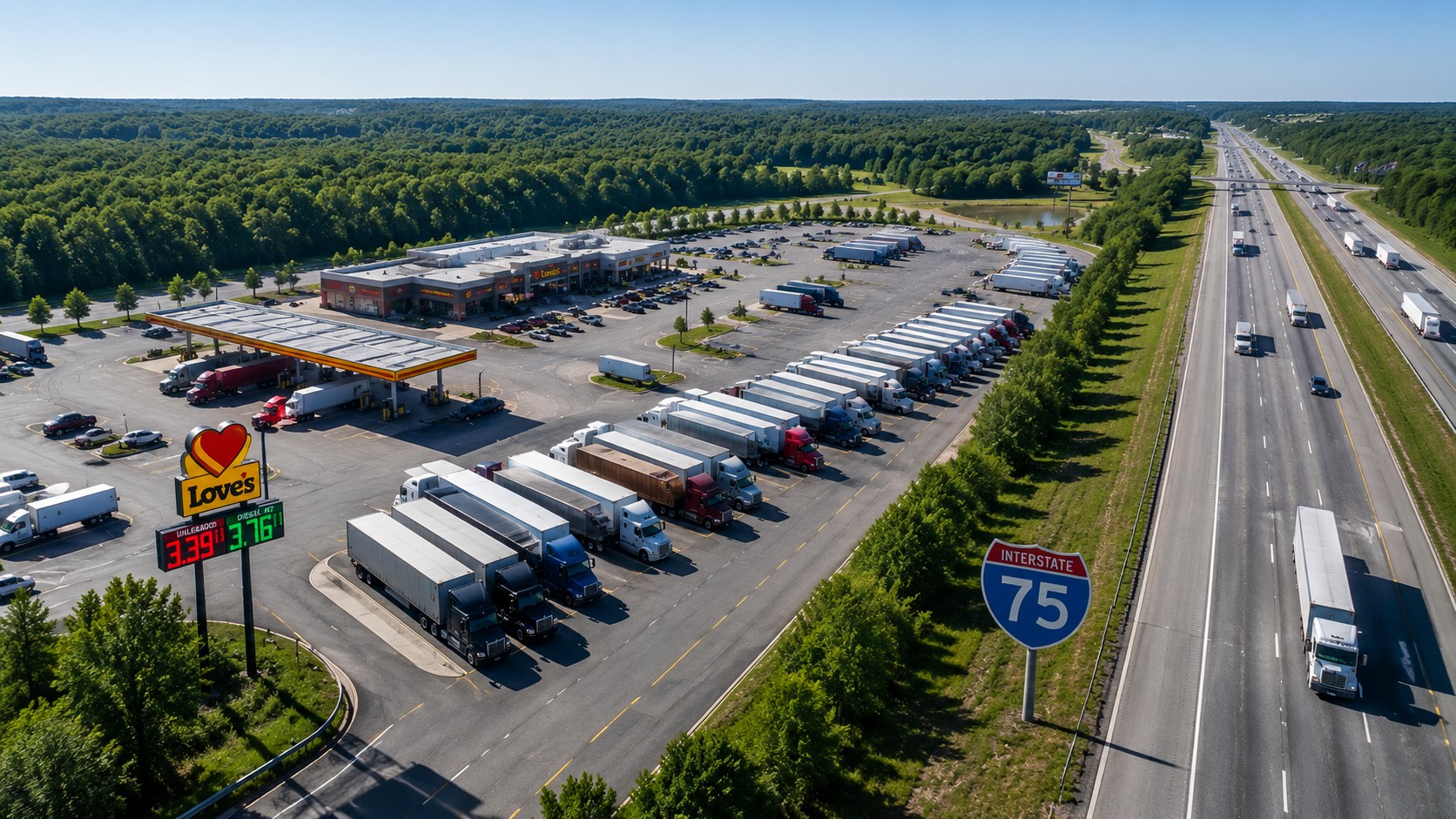
<p>Georgia is adding 59 truck parking spaces across 2 projects on I-75 by 2026 — modest relief on one of the Southeast's tightest freight corridors. The news is good, but 59 spaces will not flip this corridor into an easy night. Drivers running Georgia I-75 this week will still get more from earlier stop planning than from waiting on new capacity to show up.</p>
<h2>How Do Drivers Rework a Georgia I-75 Stop Plan Right Now?</h2>
<p>Start by assuming the new spaces will help, but not enough to change old habits overnight. When a state adds 59 spots across an entire interstate corridor, those spaces matter most for drivers who build a stop plan before the final hour starts shrinking. Truck parking ranked as the No. 2 critical issue in the trucking industry in both 2023 and 2024, according to <a href="https://atri-online.org/research/results/critical-issues-in-the-trucking-industry-2024/">ATRI</a> — and I-75 through Georgia is exactly the kind of corridor that drives that ranking.</p>
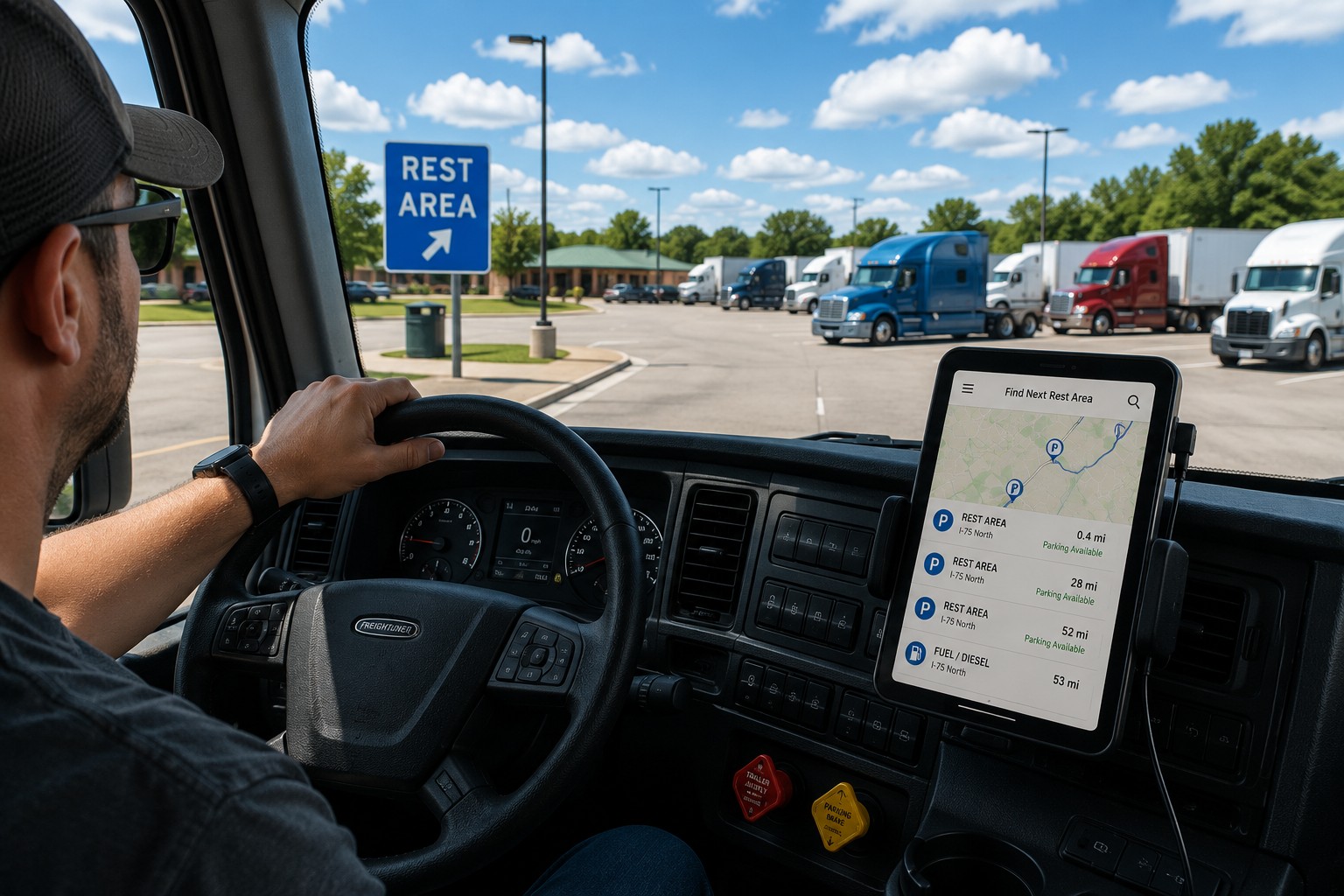
<p>A practical move is to line up a primary stop and a backup before crossing into the busiest stretch. Most experienced drivers already do this on tight corridors, because the worst time to start hunting is when the clock is low and every lot on the board looks packed. Trucker Path shows live truck parking status — open, full, or closed — at stops along the route, so the picture updates in the afternoon when it still matters, not at the exit ramp when it is already too late.</p>
<p>It also helps to think in windows instead of a single destination. If the first planned stop fills early, having the next realistic option already in mind keeps the run calm and cuts down on last-minute wandering around exits that were never built for heavy truck traffic. A lot of drivers check parking status a couple of hours before shutdown, when there is still room to adjust the plan without pressure.</p>
<h2>When 59 New Spaces Hit I-75, Will Georgia Truck Parking Get Easier?</h2>
<p>Yes, but only in a limited way. The Georgia announcement covers 2 projects adding a combined 59 truck parking spaces on I-75, with a timeline tied to 2026. More room is coming — but not all at once, and not at the scale that removes pressure across the whole route.</p>
<p>New parking projects often sound bigger in a headline than they feel from behind the wheel, especially on a long freight corridor where demand can swallow added capacity fast. The smart read on this news is not "problem solved." It is "a little more breathing room may be coming, so now is a good time to tighten up how the stop gets planned." Some additions ease pressure at one stretch of interstate but do not change the next high-demand area much at all.</p>
<p>That is also where truck-safe routing matters beyond just getting to the stop. When a primary lot fills and a driver needs to move to a backup, the route between them has to work for a tractor-trailer. Trucker Path's commercial routing keeps trucks off low bridges, weight-restricted roads, and exits that look fine on a passenger-car app but fall apart for a long combination. The backup stop only helps if the path there actually works.</p>
<p style="margin:24px 0;">
<a href="https://truckerpath.onelink.me/ivkh/n0eiei2g" style="display:inline-block; background-color:#0A8DD1; color:#FFFFFF; font-weight:bold; font-size:16px; padding:14px 28px; border-radius:6px; text-decoration:none;">Check Live Parking on Georgia I-75</a>
</p>
<h2>What Usually Trips Drivers Up on This Corridor Before Parking Fills?</h2>
<p>The biggest problem is not just a full lot. It is everything that happens right before that full lot: traffic slows the day down, weather changes the pace, and a stop that looked possible in the morning turns into a reach by late afternoon. That is where a lot of plans break apart on Georgia I-75 — a driver leaves too little cushion, hits congestion near Atlanta or Macon, and starts chasing parking farther than the clock comfortably allows.</p>
<p>Most experienced drivers handle this by checking the whole run, not just the stop itself. Real-time traffic and weather data along the route can flag a slow stretch early enough to move the parking decision up by an hour — which on a tight corridor is often the difference between a clean night and a stressful one. Trucker Path also shows live highway cameras so a driver can see what a stretch of road actually looks like before rolling into it, not just what a forecast says it should look like.</p>
<p>It also helps to avoid improvised detours onto roads that were never a good fit for a tractor-trailer. When parking gets scarce and a driver starts improvising, the route to the backup stop matters just as much as knowing the first stop is full. A truck-safe path to the next option is part of the plan, not an afterthought.</p>
<h2>How Far Ahead Should Drivers Start Looking for Parking on Georgia I-75?</h2>
<p>On a corridor with tight capacity, a lot of guys start checking options well before the final stretch of drive time. Once parking pressure ramps up, every late decision gets harder and every backup option gets weaker. That does not mean stopping too early every day — it means keeping enough cushion to react when a lot flips from open to full, traffic eats time, or weather changes the pace of the run.</p>
<p>Drivers who handle this well usually build the plan in layers: first stop if everything goes right, second stop if the day gets messy, and a clear truck-safe route between them so the whole evening does not depend on one parking lot working out. That is especially useful on Georgia I-75 right now, where this new parking news may cause some drivers to assume relief is already here.</p>
<p>The added spaces are good news. But the day-to-day parking fight on this corridor will still come down to timing — and checking a few hours early, not right at the exit, is where most of the margin lives.</p>
<h2>Frequently Asked Questions</h2>
<h3>How many new truck parking spaces is Georgia adding on I-75?</h3>
<p>Georgia announced 2 projects that will add a combined 59 truck parking spaces on I-75. The timeline in the announcement points to 2026, meaning those spaces are not all available yet as of this writing.</p>
<h3>Will 59 new spaces fix parking problems on Georgia I-75?</h3>
<p>Not by themselves. Those spaces will help, but I-75 is a high-pressure freight corridor and 59 spaces spread across 2 projects will not eliminate the parking crunch drivers already know. Most drivers will still need to plan stops early and keep a backup option in mind.</p>
<h3>What is the most practical adjustment drivers should make after this news?</h3>
<p>The biggest adjustment is timing. Checking live parking status a couple of hours before shutdown — rather than in the final stretch of available hours — gives drivers room to react before the best options are gone. Building a backup stop into the plan before the run starts is the other half of that habit.</p>
<h3>When will the new Georgia I-75 truck parking spaces open?</h3>
<p>The state announcement ties the projects to 2026, but the specific open dates for each location have not been confirmed publicly as of this writing. Until those spaces are in service, drivers will still be dealing with the same parking pressure they know today.</p>
<h3>What tool helps drivers check parking before running Georgia I-75?</h3>
<p>Trucker Path shows live truck parking status — open, full, or closed — alongside commercial routing, real-time traffic, weather, fuel prices, and live highway cameras in one app. That combination helps when a stop plan needs to change before a tight corridor gets worse.</p>
<h2>Summary</h2>
<ul>
<li>Georgia announced 2 I-75 truck parking projects adding a combined 59 spaces by 2026 — a real improvement, not a fix</li>
<li>Truck parking ranked as the No. 2 critical issue in the trucking industry in both 2023 and 2024, per ATRI; I-75 in Georgia is one of the corridors that drives that ranking</li>
<li>The added capacity matters most for drivers who already plan stops early — 59 spaces will not rescue a late decision on a high-demand corridor</li>
<li>Traffic, weather, and truck-safe routing shape the parking decision as much as the lot itself; checking the full run, not just the stop, is what keeps the plan intact</li>
<li>The best use of this news is practical: tighten up the stop plan before running Georgia I-75, not after the obvious spots fill</li>
</ul>
<p style="margin:24px 0;">
<a href="https://truckerpath.onelink.me/ivkh/n0eiei2g" style="display:inline-block; background-color:#0A8DD1; color:#FFFFFF; font-weight:bold; font-size:16px; padding:14px 28px; border-radius:6px; text-decoration:none;">Plan Your Georgia I-75 Stop Now</a>
</p>
<h3>Sources</h3>
<ul>
<li>Georgia Department of Transportation — Georgia I-75 truck parking expansion announcement, 2026</li>
<li><a href="https://atri-online.org/research/results/critical-issues-in-the-trucking-industry-2024/">ATRI — Critical Issues in the Trucking Industry, 2024</a></li>
</ul>
<em>Project timing and parking availability can change; conditions on the road may have shifted since this article was published on July 27, 2026.</em>
Spot Rates Fell Again Last Week: How Owner-Operators Can Screen Loads More Carefully in a Seasonal Dip <em>Published July 24, 2026</em>
<p>Spot truckload rates slipped again last week, and both FTR and Truckstop called it seasonal — not a collapse. When rates soften this way, freight selection matters more than speed, because a weak reload or slow-paying broker can do more damage than a slightly lower outbound rate. Here is how owner-operators can screen loads smarter when the market gives less room for mistakes.</p>
<h2>Why Does a Seasonal Dip Make Load Screening More Important?</h2>
<p>Seasonal dips happen. The problem is not that rates cool off for a week or two. The problem is what happens next when a carrier chases freight without looking at the full trip, the reload market, or who is actually posting the load.</p>
<p>FTR and Truckstop both described the latest move as seasonal. That gives drivers an important clue. This kind of week does not automatically mean freight disappears — it means the market gives less room for mistakes. One decent outbound load can still turn into a rough week if the reload is thin, the deadhead stretches out, or the broker pays slow. Most owner-operators do not get hurt on one bad decision. They get hurt on two or three small ones stacked together.</p>
<h2>How Do Owner-Operators Screen Loads When Spot Rates Soften?</h2>
<p>In a soft market, load screening gets more important than load volume. A lot of posted freight looks workable at first glance, but the details tell the real story. Lane, reload options, broker history, and total trip math all matter more when margins are thin.</p>
<ol>
<li><strong>Look at the full lane, not just the first leg.</strong> A load out of a decent market can still be a problem if it dumps a truck into a weak reload area. Rate Check helps add lane context before a driver starts negotiating off a headline number alone.</li>
<li><strong>Check deadhead on both sides.</strong> Short loaded miles with long unpaid repositioning can wreck an otherwise decent-looking run. In a softer week, even an extra reposition can wipe out what looked like a fair load.</li>
<li><strong>Check who posted it and how they pay.</strong> In a softer week, waiting longer to get paid hurts more because every trip carries more pressure. Broker credit scores and days-to-pay reports give another screen before a call goes too far.</li>
</ol>
<p>That is where selectivity beats speed. Freight still moves in seasonal dips, but it pays to sort harder and call on loads that fit the truck, the week, and the next reload.</p>
<p>A realistic example: a van load that looks fine on the first leg can still go sideways if it delivers into a weak market late in the day with no good reloads until the next morning. Another load with a similar posted rate may deliver into a busier market with more same-day options. On paper, those two loads can look close. In real life, they are not close at all.</p>
<p style="margin:24px 0;">
<a href="https://truckerpath.onelink.me/ivkh/n0eiei2g" style="display:inline-block; background-color:#0A8DD1; color:#FFFFFF; font-weight:bold; font-size:16px; padding:14px 28px; border-radius:6px; text-decoration:none;">Search Loads by Lane</a>
</p>
<h2>Which Loads Are Worth Passing on During a Seasonal Dip?</h2>
<p>A soft patch is when bad freight starts dressing up like good freight. Maybe the rate looks decent on the first call, but the delivery lands late in a weak market. Maybe the miles are short, but the pickup burns half a day. Maybe the broker needs the truck badly, which sounds good until the rate confirmation and payment terms show up.</p>
<p>Loads worth skipping often share a few traits:</p>
<ul>
<li><strong>They pull a truck into a cold backhaul market.</strong> A load can look fine on the outbound and still leave a carrier stuck hunting cheap reloads.</li>
<li><strong>They require too much unpaid setup.</strong> Long deadhead, driver assist, tight appointment windows, or excessive waiting can eat the load alive.</li>
<li><strong>They come from a broker with shaky pay habits.</strong> Driver-submitted broker credit scores and days-to-pay reports can help flag extra risk before a call gets too far.</li>
<li><strong>They do not fit the truck's week.</strong> A flatbed, reefer, van, or hotshot operation all have different lane patterns. A load that works for one setup may not work for another.</li>
</ul>
<p>Most experienced drivers do not pass on freight because they are picky for no reason. They pass because bad freight costs more in a weak market than it does in a strong one. If a load needs a lot of things to go right, it probably carries more risk than it first appears. If the pickup has tight timing, the delivery is into a weak area, and the broker has slower pay feedback — that is three pressure points on one trip. In a seasonally softer week, stacking those risks rarely helps.</p>
<h2>How Can Carriers Stay Disciplined on Backhauls Instead of Chasing the First Reload?</h2>
<p>Backhaul discipline is where a lot of profit gets saved. When spot rates dip, the first reload after delivery can feel like a lifeline. That is exactly when some carriers end up taking freight that keeps them running hard and earning less.</p>
<p>A better move is to read the market around the delivery point before the truck gets there. If outbound volume looks thin and inbound volume looks heavy, the next load may not come easy. That can change how a driver prices the first load, how far they are willing to deadhead for a reload, or whether the truck even belongs in that market this week.</p>
<p>Tools matter here because memory only goes so far. A lot of drivers know a market felt weak last time, but lane conditions shift. Looking at a load density map and a capacity indicator can help spot where freight is tighter or looser by lane and state — which gives the next decision more context than gut feel alone.</p>
<p>That same discipline helps with timing. If a truck posts capacity early, sets load alerts, and watches matching reloads before delivery, the driver gets options. Options matter when rates are soft because desperation usually shows up in the final booking.</p>
<p>Say one load gets the truck out at an okay rate, but the delivery market shows thin outbound options for that equipment. Another outbound load may pay about the same yet land in a market with better density and more likely follow-up freight. In a stronger market, either load might work. In a soft seasonal patch, the second one usually gives the week a better chance.</p>
<h2>Frequently Asked Questions</h2>
<h3>Are lower spot truckload rates always a sign of a bad market?</h3>
<p>No. FTR and Truckstop described the latest drop as seasonal, which means timing plays a role. A soft week can still have workable freight if the lane, timing, and reload plan make sense.</p>
<h3>How do drivers avoid bad backhauls when rates are down?</h3>
<p>Most carriers start by looking past the outbound load and studying the delivery market. If reload options look thin, the first load needs to carry more of the trip — or the truck may need a different lane entirely.</p>
<h3>What matters more in a soft market: rate or reload?</h3>
<p>Both matter, but reload risk often decides whether the whole trip pays off. A decent first load can turn weak fast if the truck lands where outbound freight is loose and deadhead starts piling up.</p>
<h3>Should owner-operators lower their rates right away when the weekly market turns down?</h3>
<p>A lot of experienced drivers do not rush to do that across the board. They look at the lane first, then weigh timing, total trip cost, and how strong the next move looks before changing their number.</p>
<h2>Summary</h2>
<ul>
<li>FTR and Truckstop both pointed to a seasonally weaker week — softer pricing needs smarter load selection, not panic</li>
<li>In a dip, the full trip matters more than the first rate on the screen: lane strength, deadhead, timing, and reload options all count</li>
<li>Bad backhauls do more damage in a soft market, so market selection and reload planning carry more weight than usual</li>
<li>Broker pay habits and trip details can matter just as much as the posted rate when margins get tight</li>
<li>Strong operators stay selective, keep options open, and price freight by the lane instead of reacting to one weekly headline</li>
</ul>
<p style="margin:24px 0;">
<a href="https://truckerpath.onelink.me/ivkh/n0eiei2g" style="display:inline-block; background-color:#0A8DD1; color:#FFFFFF; font-weight:bold; font-size:16px; padding:14px 28px; border-radius:6px; text-decoration:none;">Find Better Freight Now</a>
</p>
<h3>Sources</h3>
<ul>
<li><a href="https://www.ftrintel.com">FTR Transportation Intelligence — Weekly Trucking Update, July 2026</a></li>
<li><a href="https://www.truckstop.com/blog/market-demand-index/">Truckstop.com — Market Demand Index, week of July 21, 2026</a></li>
<li><a href="https://www.atri-online.org/research/operational-costs-of-trucking/">ATRI — An Analysis of the Operational Costs of Trucking, 2025 Update</a></li>
</ul>
<em>Spot rate data reflects the week of July 21, 2026 as reported by FTR and Truckstop; figures may have moved since publication.</em>
Thinking Like a Business Versus Thinking Like a Trucker It's ironic that the business practices that can feel like the enemy of independence are actually the best ways for truckers to hold onto the independence they care about most. Good business habits aren't about selling out — they're the foundation that makes it possible to keep doing things your way.
<h2>Cost per mile: the number that tells you everything</h2>
Are you making money or losing money on a given load? The answer lives in your cost per mile (CPM). Know your CPM and you know your break-even point. Know your break-even point and you know what rate per mile you need to make a run worth taking.
<h2>The biggest costs that determine your CPM</h2>
Based on the American Transportation Research Institute (ATRI) <a href="https://truckingresearch.org/about-atri/atri-research/operational-costs-of-trucking/">Operational Costs of Trucking</a> report:
<ol>
<li><strong>Fuel: 38% of operational costs.</strong> Finding the best prices and running fuel-efficient practices has major impact on profitability — more than almost anything else you control day to day.</li>
<li><strong>Truck payment: 31% of operational costs.</strong> With today's high borrowing rates and vehicle prices, truck payments make up a large share of CPM. It's a strong argument for used equipment and paying cash when possible.</li>
<li><strong>Parts and maintenance: 16% of operational costs.</strong> Don't treat these as incidental. Estimate a per-mile cost and build it into your CPM — they add up whether you plan for them or not.</li>
<li><strong>Insurance: 8% of operational costs.</strong> Premiums are a major cost today. Actions that lower your risk profile — a good safety score, clean inspections, no violations, consistent PM records — can indirectly lower this number over time.</li>
<li><strong>Tires: 4% of operational costs.</strong> A necessary and predictable expense. Use past purchases to estimate your per-mile tire cost and include it in your CPM calculation.</li>
</ol>
Calculate your CPM using a tool like <a href="https://www.ooida.com/trucking-tools/cost-per-mile/">OOIDA's CPM calculator</a>. Most costs stay fixed day to day — you can fine-tune by adjusting for actual fuel costs as they change.
<h2>Five business practices worth thinking deeply about</h2>
<ol>
<li><strong>Planning.</strong> A big-picture strategy keeps you from living load-to-load. Will you specialize in a lane, build repeat relationships with specific customers, or work with freight brokers? Having an answer gives you focus and a way to measure progress.</li>
<li><strong>Policies.</strong> Clear rules around detention and accessorial charges protect your time and your revenue. Without them in writing — and a commitment to enforcing them — you're leaving money on the table.</li>
<li><strong>Paperwork.</strong> Organized bills of lading, permits, and insurance documents support your efficiency during inspections and reinforce your professionalism with customers. The time spent staying organized costs less than the time spent scrambling when something is missing.</li>
<li><strong>Recordkeeping.</strong> Compile expenses daily. Invoice accessorials immediately while the customer's memory of the load is still fresh. Details that seem easy to remember rarely are by the end of the week.</li>
<li><strong>Key performance indicators.</strong> Objective numbers show you how you're doing. They motivate improvements, prompt adjustments, and flag problems before they compound.</li>
</ol>
<strong>KPIs every owner-operator should track:</strong>
<ul>
<li>Cost per mile (CPM)</li>
<li>Rate per mile (RPM)</li>
<li>Deadhead percentage</li>
<li>Utilization — loaded days versus available days</li>
</ul>
<h2>Planning for the cycles, not just the current market</h2>
Trucking is a boom-and-bust industry. The rate boom of the pandemic years gave way to a prolonged freight recession. The practices that protect you in a down market are the same ones that build your business in a strong one. Make them a habit regardless of where the market is.
<strong>Control fixed costs.</strong> Low or no truck and trailer payments give you flexibility when rates drop. Review your insurance regularly to make sure your rate is competitive. Watch smaller fixed costs like subscriptions — they add up quietly.
<strong>Diversify load sources.</strong> Having inroads with load boards, freight brokers, and direct shippers means losing one customer doesn't dry up your cash flow. Options are worth building before you need them.
<strong>Foster long-term relationships.</strong> Loyalty to brokers and shippers in high-rate periods earns you priority access when loads are scarce. That goodwill is worth more than the premium on any single load.
<strong>Specialize in a lane or niche.</strong> Flatbed, tanker, reefer, oversized, a specific commodity or corridor — specialists tend to be in shorter supply, which helps buffer the effects of market swings.
<strong>Save from every load.</strong> Consistent savings get you through down periods and cover unexpected expenses without factoring fees or taking desperate loads. Enough saved capital can also let you pay for equipment outright and eliminate truck payments entirely.
<strong>Stay consistent with sales and marketing.</strong> Maintain a professional brand — equipment appearance, website, business listings. Keep a basic information sheet on hand for prospects. Stay in contact with past customers. Referrals from <a href="https://wp-login.truckerpath.com/blog/good-customer-service-practices-are-survival-skills/">good customer service</a> are the cheapest leads you'll ever get.
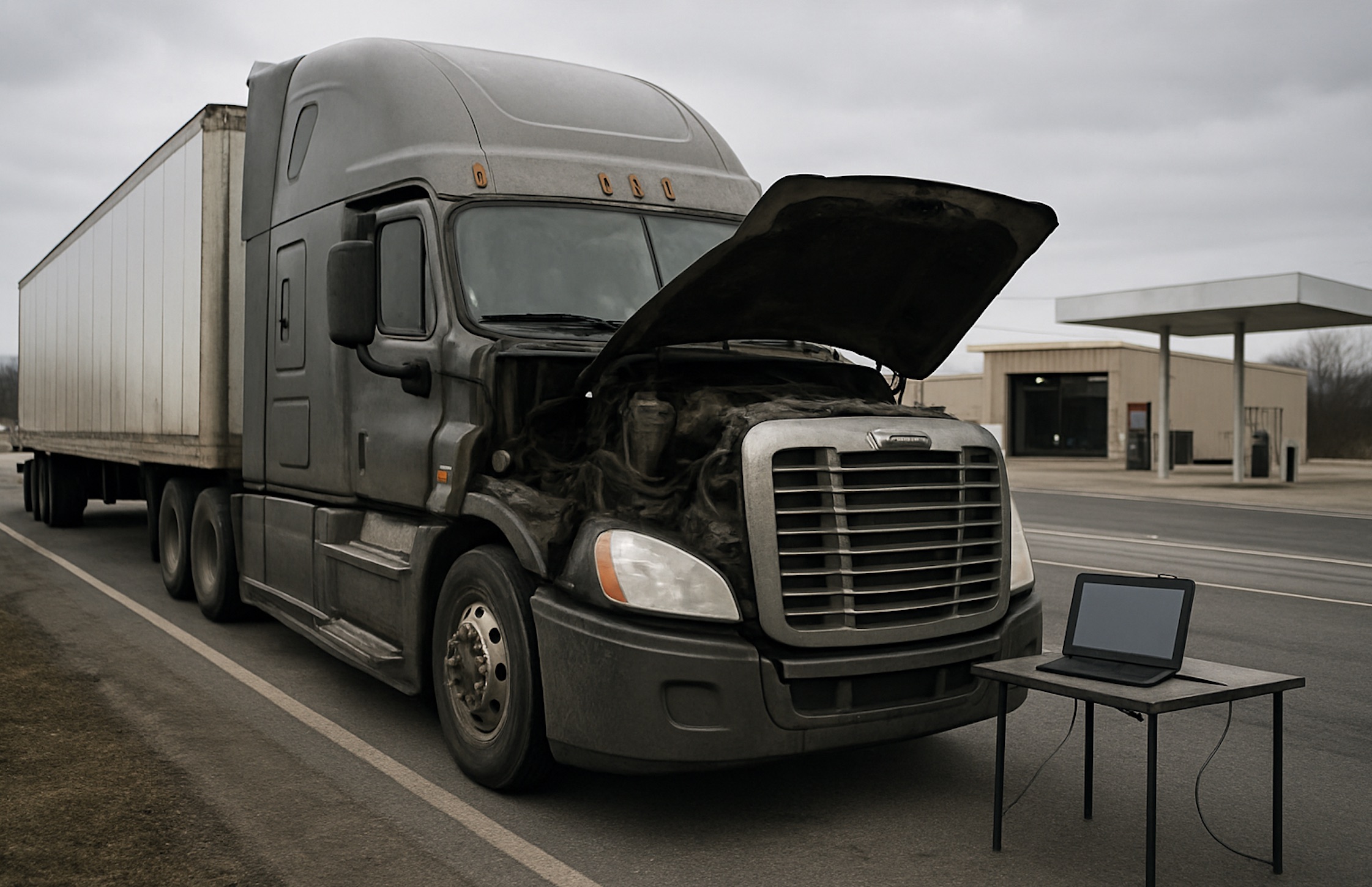
<strong>Do your preventative maintenance.</strong> Time spent on PM buys you more time driving and earning. Breakdowns cut off revenue while piling on costs — repairs, towing, rentals, hotels, lost loads. Consistent PM prevents breakdowns, keeps you ready for inspections, and stops small problems from becoming expensive ones.
<strong>Outsource what pulls you off the road.</strong> Dispatching, bookkeeping, maintenance, and compliance all take time. When they reduce your available driving hours, they're costing you. A professional handling those functions while you focus on driving can pay for itself.
<h2>Good business habits protect the freedom you're in trucking for</h2>
Strong business practices don't get in the way of independence — they're what sustains it. They keep you financially stable through cycles, reduce stress when the market gets hard, and give you options when other operators don't have any.
Technology has made good business practices more accessible than ever. The Trucker Path app puts the cheapest fuel along your route, truck-safe routing, trucker-recommended service providers, and a load board with thousands of new loads posted daily in one place. <a href="https://truckerpath.onelink.me/ivkh/n0eiei2g">See what's available on your next run.</a>