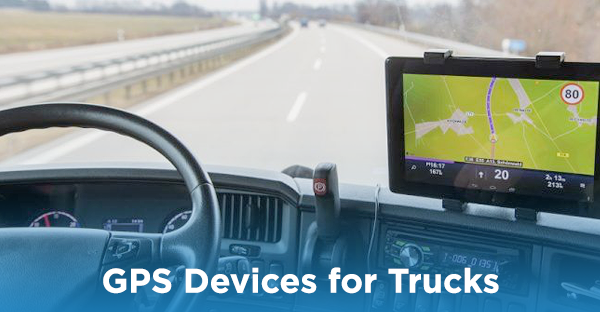
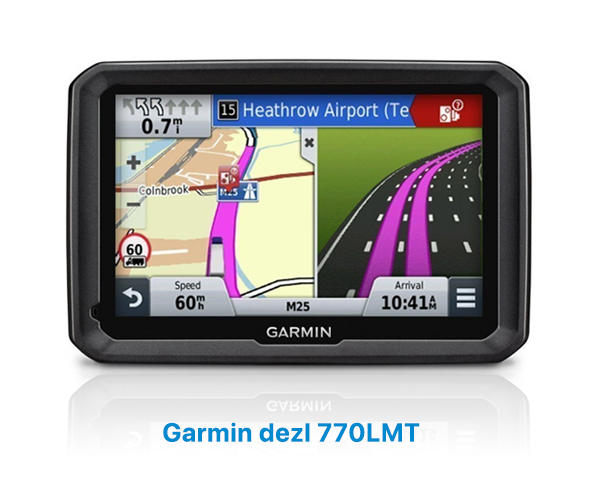
2. Rand McNally TND 520Cost: Approximately $400Description: 5” display screen.Features: This trucking GPS navigation unit features updates on weather, fuel pricing, traffic, and travel centers along with assistance tracking fuel and mileage logs.
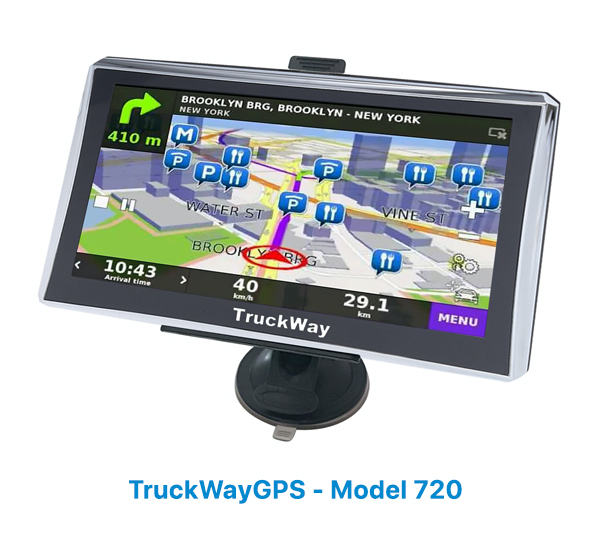
3. TruckWayGPS – Model 720 Cost: Approx $150Description: large 7” touch screen display, with 800×400 pixels.Features: This trucking GPS navigation unit provides drivers with current and up-to-date maps, 3D maps, as well as free maps for the US and Canada. You can even enter the weight and directions for your truck so you can get the best route for the type of load you’re hauling.
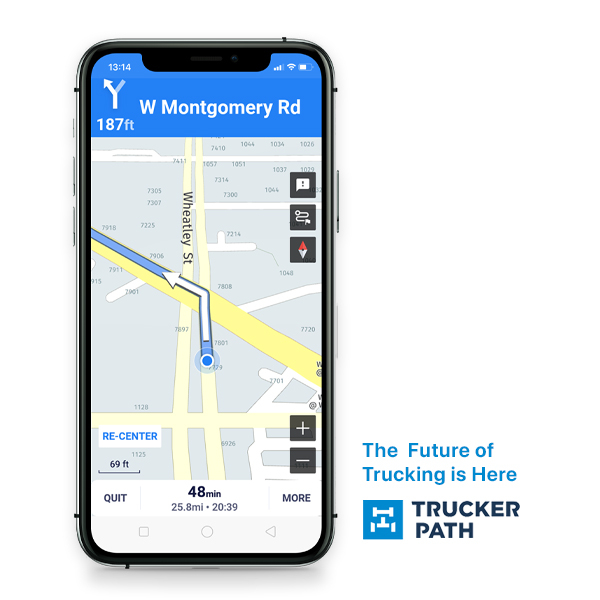
For many drivers, a GPS unit on its own isn’t enough to give them the information they want or need. Many drivers like to use supplementary apps to ensure they have their location and approach nailed down. Apps like Trucker Path offer additional information and features that GPS units simply don’t have (for only $9.99 a month),such as more information on truck stops, best places for truckers to get food, best places to stay the night, updates on whether stops are open, and even ratings from other truck drivers on what these places are like. 


Truck Driver Injury Prevention [p] Driving a heavy-duty truck is one of the most dangerous jobs in America. Take a look at these truck driver injury prevention tips to stay safe on the road. [/p]
[h2] Truck Driver Injury Prevention [/h2]
[p]The trucking industry is a profession with one of the highest workers’ compensation claim rates. The profession itself requires long hours of driving, poor diets, and little exercise, making truck drivers prone to injuries. These truck driver injury prevention tips can help limit drivers at risk. [/p]
[p] In America, Washington State alone, workers’ compensation claims are so high that there is an initiative for preventing on the job injuries for truck drivers. It is referred to as the TIRES Initiative. [/p]
[p]Each year, 1-out-of-13 truck drivers in Washington state has a work-related injury serious enough that they have to miss work for a long period of time, on an average of 184 days.[/p]
[p]Truck drivers had more nonfatal injuries (over 151,000) than workers in any other occupation in 1995. 50 percent of the nonfatal truck accident injuries were serious sprains and strains; this may be attributed to the fact that many truck drivers must unload the goods they transport. (Source: According to Knestaut, A. Compensation, and Working Conditions, 1997, Fall)
[/p]
[p]Long hours of driving, poor diets and little exercise make drivers prone to work-related strains and sprains with injuries to muscles, tendons, nerves and other musculoskeletal disorders (MSDs). [/p]
[p]<strong>Injuries are often due to:</strong>[/p]
[ul]
[li]Overexertion[/li]
[li]Being struck by an object[/li]
[li]Falling[/li]
[li]Transportation accidents[/li]
[li]Repetitive use of body[/li]
[li]Lifting heavy boxes and cargo[/li]
[li]Awkward postures such as reaching overhead [/li]
[li]Gripping tightly or improperly[/li]
[/ul]
[p]Work-related strains and sprains make up 50% of injuries are the most costly and most frequent injuries in the trucking industry. Sprains, strains and overexertion make up for the most trucking-related injuries. [/p]
[p]Studies show that costs exceed $107 million and resulting in 576,000 lost-work days per year. About 70 percent of these injuries were to truck drivers. Many of the injuries occurred when opening shipping container doors or connecting or disconnecting a trailer to the truck.[/p]
[p]<strong>Strains and sprains can include:</strong>[/p]
[ul]
[li]Back pain[/li]
[li]Shoulder pain[/li]
[li]Muscle strain[/li]
[li]Tendonitis[/li]
[li]Carpal tunnel syndrome (CTS)[/li]
[li]Tennis elbow (epicondylitis)[/li]
[li]Other common injuries include bruises, fractures, cuts and lacerations, soreness and pain, and multiple traumatic injuries.[/li]
[/ul]
[p]<strong>The most common situations where truck accident injuries occur include:</strong>[/p]
[ul]
[li]Vehicle accidents[/li]
[li]Carpal tunnel injury[/li]
[li]Strained wrists from opening hard to open containers[/li]
[li]Strains and back injuries from lifting and moving items or releasing 5th wheel to remove tractor from trailer[/li]
[li]Slip and falls climbing in or out of the cap or trailer[/li]
[li]Accidents while loading or unloading trailer[/li]
[li]Slip and falls on docks[/li]
[li]Crush injuries where part of load falls on driver[/li]
[/ul]
[p]<strong>Workers’ Compensation Costs</strong>[/p]
[ul]
[li]41% of compensable claims are the result of strains and sprains to the neck, back and upper extremity (shoulders, elbows, hands/wrists)
[li]The average cost for a claim is over $26,000
[li]Average of 184 time-loss days Compared to other industries
[/ul]
[p]Couriers have almost four times the rate of work-related strains and sprains claims of all industries combined. Waste Collection has three and a half times the rate and General Freight trucking is close with almost two and a half times the rate of work-related strains and sprains of all other industries combined.[/p]
[p]<strong>Additional Costs</strong>[/p]
[p]Work-related time off also increases the cost of hiring and training, increasing turnover and decreasing productivity. Sometimes workers are unable to return to their full wage jobs after an injury or require extensive life-altering surgeries or treatments to recover.[/p]
[p]Take Steps to equip truck drivers and operators with the proper tools needed to help them avoid injury.[/p]
[p]To help offset these unwanted expenses we introduce <a href="https://www.shippingcontainertool.com/">OPNBar</a>, a 3 in 1 shipping container safety leverage tool, <a href="https://www.shippingcontainertool.com/use-tire-beater-check-tires-properly-inflated/">tire beater/thumper</a>, and <a href="https://www.shippingcontainertool.com/how-to-release-a-5th-wheel/">5th wheel release handle/hook</a>. Our product was originally designed for opening and closing truck trailers and shipping container doors with the safety for the operator foremost in mind. The OPNBar trucker tool, for instance, can help avoid some injuries by providing an ergonomic means of opening shipping containers, checking for low pressure tires, and aiding operators in releasing the tractor from the trailer.[/p]
[video id="wdokuVGpIcE"]
[p]Educate truckers, equip them with the right tools, and teach them good health habits to keep them safe and healthy. These simple precautions can help companies avoid unexpected fees and missed work days.[/p]
How to Start a Trucking Company
[p]Wondering how to start a trucking company and earn more money? There are several steps and a few guidelines to follow. [/p]
[h2] How to Start a Trucking Company[/h2]
[p]Deciding to start a trucking company is a great idea and the timing is right. <a href="https://truckerpath.com/blog/trucking-industry-trends/">Trucking industry trends</a> expect freight revenue to grow by 75 percent over the next nine years and with the trucking industry eclipsing over $726.4 billion in revenue for 2015, starting a trucking company now can be extremely lucrative. The trucking industry serves as a pillar in keeping things going and as long as people have demand for products, moving freight will be necessary for years to come.[/p]
[p]Don't be intimidated by the larger trucking companies with thousands of truck drivers and investors to provide capital. 90 percent of trucking companies are small fleets of six trucks or less so there's space in the industry for you to learn how to start a trucking company.[/p]
[h2] 1. Apply for Trucking Authority - Trucking Company Forms[/h2]
[p]Paperwork, documentation, and forms. They're tedious and might seem redundant but are necessary for you to get your trucking company started and earn <a href="https://truckerpath.com/blog/trucking-authority/">trucking authority</a>.[/p]
[p]If you haven't already been assigned a US DOT number, you will need to register for a DOT number form before you can apply to obtain trucking authority. Keep in mind the old [a href="https://www.fmcsa.dot.gov/registration/form-mcs-150-and-instructions-motor-carrier-identification-report"]MCS-150 form[/a] is now only for updating existing US DOT number and not for obtaining a US DOT number.[/p]
[p]To get a US DOT number you will need to use the new [a href="https://portal.fmcsa.dot.gov/UrsRegistrationWizard/"]Unified Registration System[/a]. The processing time can take 20-25 business days according to the FMCSA.[/p]
[p]If you already have a US DOT number and wish to apply for operating authority you can do so by [a href="http://li-public.fmcsa.dot.gov/LIVIEW/PKG_REGISTRATION.prc_option"]completing this registration form[/a] and paying the associated $300 fee.[/p]
[h2] 2. Choosing a Process Agent[/h2]
[p]You will need to choose a process agent who can represent you in regards to court papers. You will need to have a process agent for each state your trucking company operates in. They are used if there ever is an issue where court papers are to be served to your trucking company in a state other than the state your company is registered in.[/p]
[p]The FMCSA has a [a href="https://www.fmcsa.dot.gov/registration/process-agents"]list of process agents to choose from here[/a]. The process agent is responsible for completing [a href="https://www.fmcsa.dot.gov/sites/fmcsa.dot.gov/files/docs/registration/1996/boc-3-1-18-2017.pdf"]Form BOC-3[/a] on behalf of your trucking company.[/p]
[h2]3. Truck Insurance[/h2]
[p]Once you've established your trucking company you will need to make sure that it's properly insured. Liability insurance is required for trucking companies to cover potential damages or injuries caused by operating a commercial vehicle.[/p]
[p]Shop around and get several quotes before making a decision on which insurance provider is best for your trucking company. [a href="https://www.fmcsa.dot.gov/registration/insurance-requirements"]Here is a detailed overview of the FMCSA insurance requirements[/a] to help get you started.[/p]
[giphy]<iframe src="https://giphy.com/embed/3o6Zt2iHqqrjNlbPS8" width="480" height="270" frameBorder="0" class="giphy-embed" allowFullScreen></iframe>[/giphy]
[h2]4. Buying or Leasing a Truck[/h2]
[p]When starting your trucking company you can buy or lease trucks depending on what suits your needs best. If you have the working capital upfront to cover the cost and want to operate a small fleet with a few trucks, buying several trucks at once from a dealer might result in a discounted price per vehicle.[/p]
[p]You can also look into leasing trucks which often times keeps the monthly costs down and can even have a lease-to-own option available. However, there are usually restrictions that apply to leasing that vary by dealer. You will want to take the time to search and compare dealer options and offers before choosing.[/p]
[p]Lastly, there is also the option to purchase used trucks which can help save you upfront but can be costly down the line. You may find a used truck that is a few years old with over 400,000 miles on it for $40,000 to $50,000 less than a new one.[/p]
[p]It might be a great deal but remember, on average, truck repairs cost an estimated $15,000 annually according to the ATRI and with used trucks, that number can be even more.
[/p]
[h2]5. Choosing the Right Truck and Trailer Equipment [/h2]
[p]
Choosing the correct equipment to haul <a href="https://truckerpath.com/blog/types-of-truck-freight/">truck freight</a> can have a tremendous impact on your trucking companies earning potential. Although freight rates fluctuate week-to-week, typically flatbed truck loads pay the highest rate on average.
[/p]
[p]
That is not to say that a reefer, van or step deck load won't ever pay a better rate. Rather it's just an overall average to consider before choosing the equipment type for your truck. Keep in mind that location also plays a major factor in determining freight rates.
[/p]
[p]<strong>Looking ahead</strong>: when you're trucking company is set up, you can find truck freight to haul on free load boards like <strong>Truckloads</strong>. Customize your truck load searches by <a href="https://truckerpath.com/blog/what-is-deadhead/">deadhead</a> location and the trailer equipment type for you. [/p]
[video id="snyBYpnuhWw"]
[h2] 6. International Registration Plan (IRP)[/h2]
[p]
By registering your vehicle through the IRP in your home state, you will be allowed to haul interstate loads as well as freight through Canada without having to worry about additional registrations. You will be provided an apportioned license plate and cab-cards now display all jurisdictions that you cover.
[/p]
[p]
The IRP registration fee for your apportioned plate will vary depending on state and vehicle weight, but typically the price ranges from $1,500 - $2,000. [a href="https://www.fhwa.dot.gov/about/webstate.cfm"]Use this list to determine what the cost will be for your state.[/a]
[/p]
[button-green href="http://vip.truckerpath.com/gold-member?utm_source=email&utm_medium=how-to-start"]Try Trucker Path Premium FREE for 14 Days[/button-green]
Tips to Maximize Your Trucker Path Experience <h2></h2>
With the vast array of features aimed to improve your trucking experience, truckers should take advantage of what the Trucker Path app has to offer. In this article, we'll help you master the art of Trucker Path. Check out these 3 tips on how to maximize your Trucker Path experience.
<h2></h2>
<h3><strong>1. Double tapping the places filter</strong></h3>
This allows you to display the places you want on your location.
<h2></h2>
<a href="https://truckerpath.com/uploads/2020/07/Emailer3-1-1.jpg"><img src="https://truckerpath.com/uploads/2020/07/Emailer3-1-1-300x300.jpg" alt="" width="300" height="300" class="alignleft size-medium wp-image-5181" /></a>
<h2></h2>
<h3><strong>2. Adding locations/places to your favorites</strong></h3>
This feature saves all your favorite locations or places so you can access them easier at a later time.
<h2></h2>
<a href="https://truckerpath.com/uploads/2020/07/Emailer3-2-1.jpg"><img src="https://truckerpath.com/uploads/2020/07/Emailer3-2-1-300x300.jpg" alt="" width="300" height="300" class="alignleft size-medium wp-image-5182" /></a>
<h2></h2>
<h3><strong>3. Switch to satellite view</strong></h3>
You'll be able to visualize the parking lot size and you may spot some obstacles too!
<h2></h2>
<a href="https://truckerpath.com/uploads/2020/07/Emailer3-3-1.jpg"><img src="https://truckerpath.com/uploads/2020/07/Emailer3-3-1-300x300.jpg" alt="" width="300" height="300" class="alignleft size-medium wp-image-5183" /></a>
<h2></h2>
<h2></h2>
Try it out yourself! Click this <a href="http://vip.truckerpath.com/gold-member?utm_source=blog&utm_medium=nurture-interest">LINK</a> to get you started.
<h2></h2>
<h2></h2>
<h4>By Aldous Aldwin</h4>
<h3></h3>
<h3></h3>