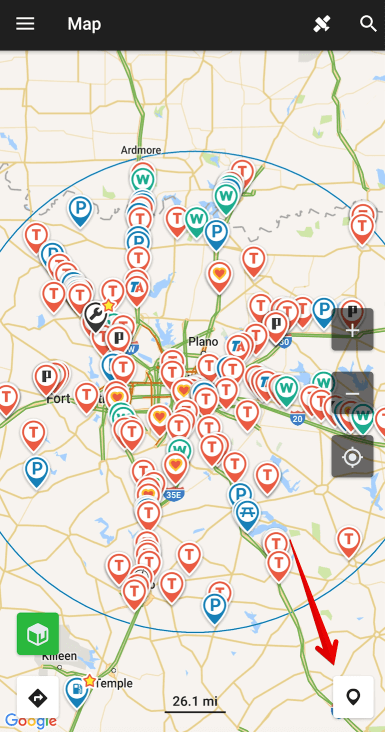
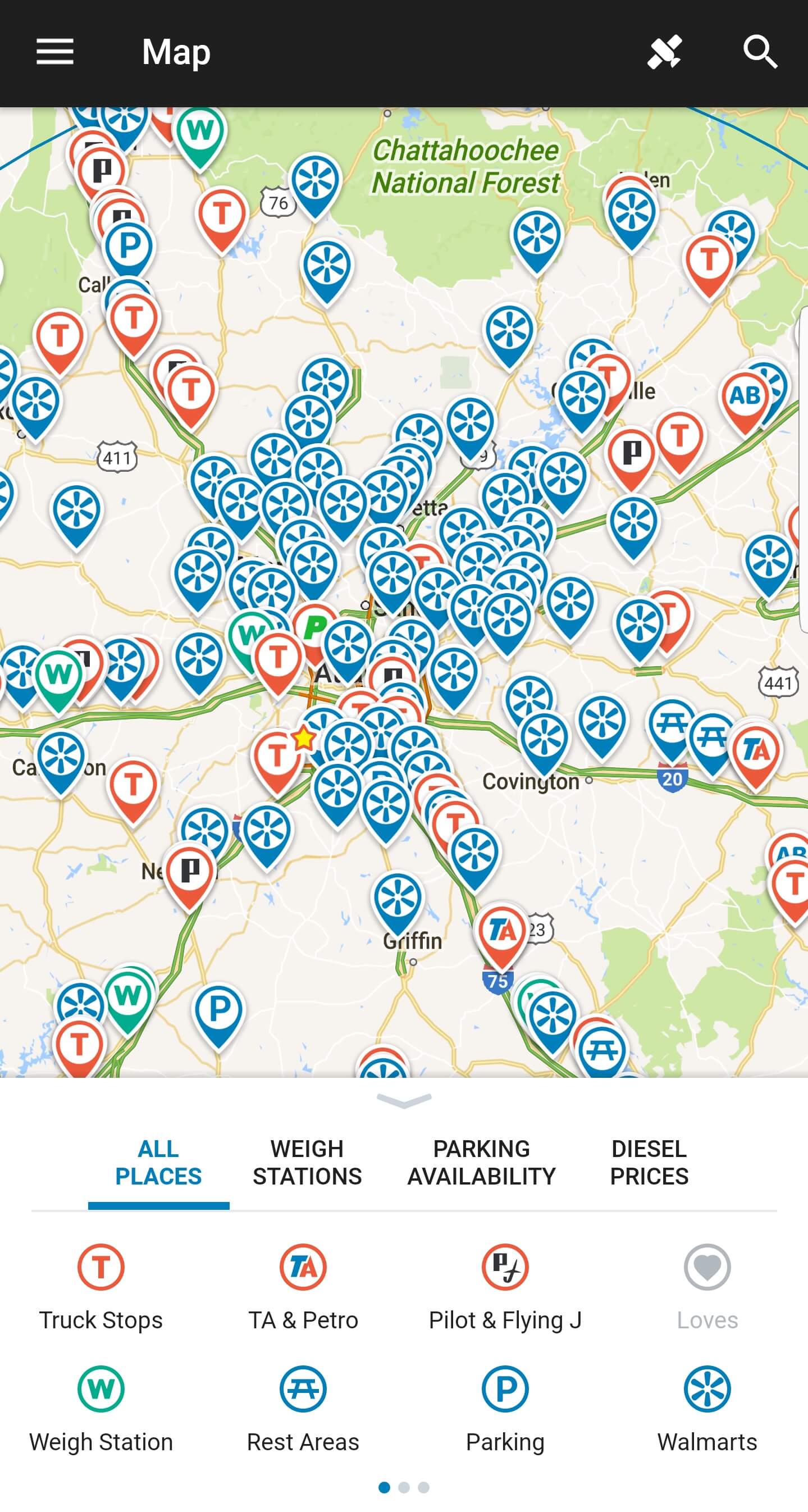
Use the Trucker Path app to find Walmart truck parking across America. Our database features 3,800 Walmart locations, including those verified to allow truck parking.
It’s no secret that Walmart has great prices and a wide selection of products. Truck drivers are on the road for weeks (sometimes months) at a time and it’s very convenient to use rest hours to do a little shopping, maybe grab a surprise gift for your significant other and get some food all at once before hitting the reset button.
Here’s how you can view Walmart truck parking locations:
Steps:
1. Open the Trucker Path app
2. Click the places icon at the bottom right of the map screen

3. Make sure the Walmart icon is selected for the locations to appear on the map (the logo will appear gray if it’s deselected).

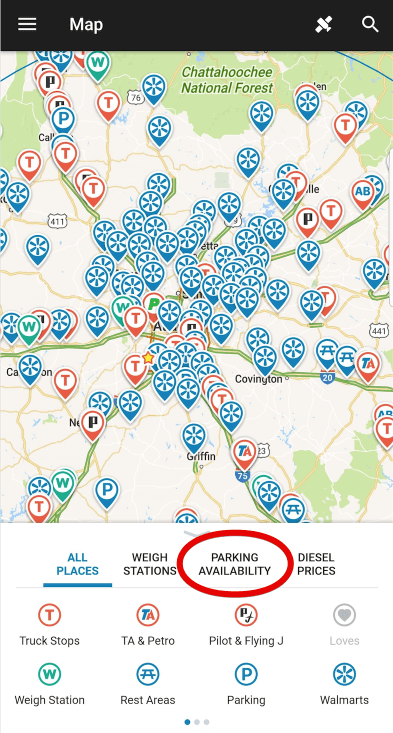
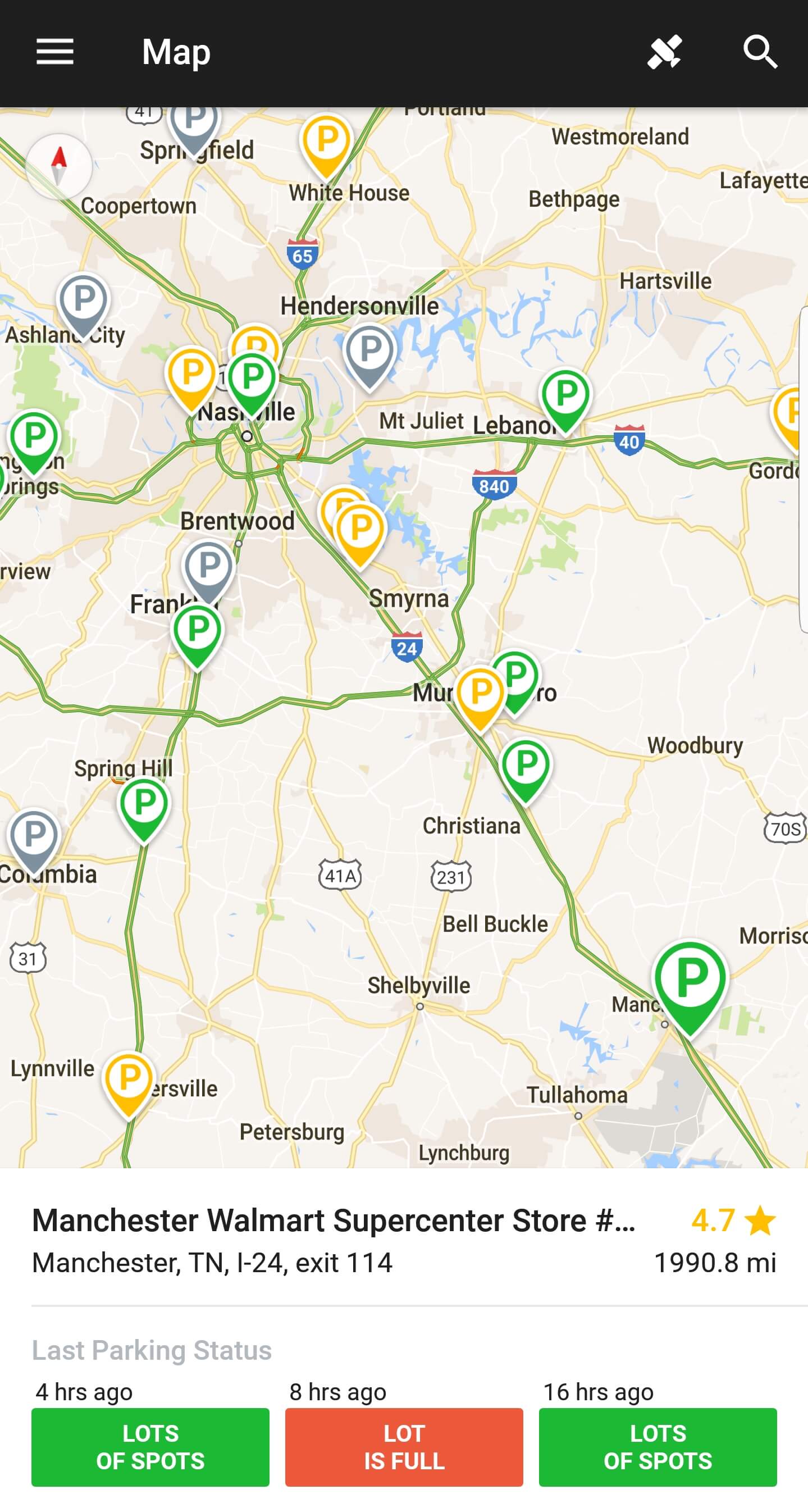
4. Click the Parking Availability tab to show Walmarts that allow truck parking.

5. Click on the location’s card at the bottom to display its detailed information.

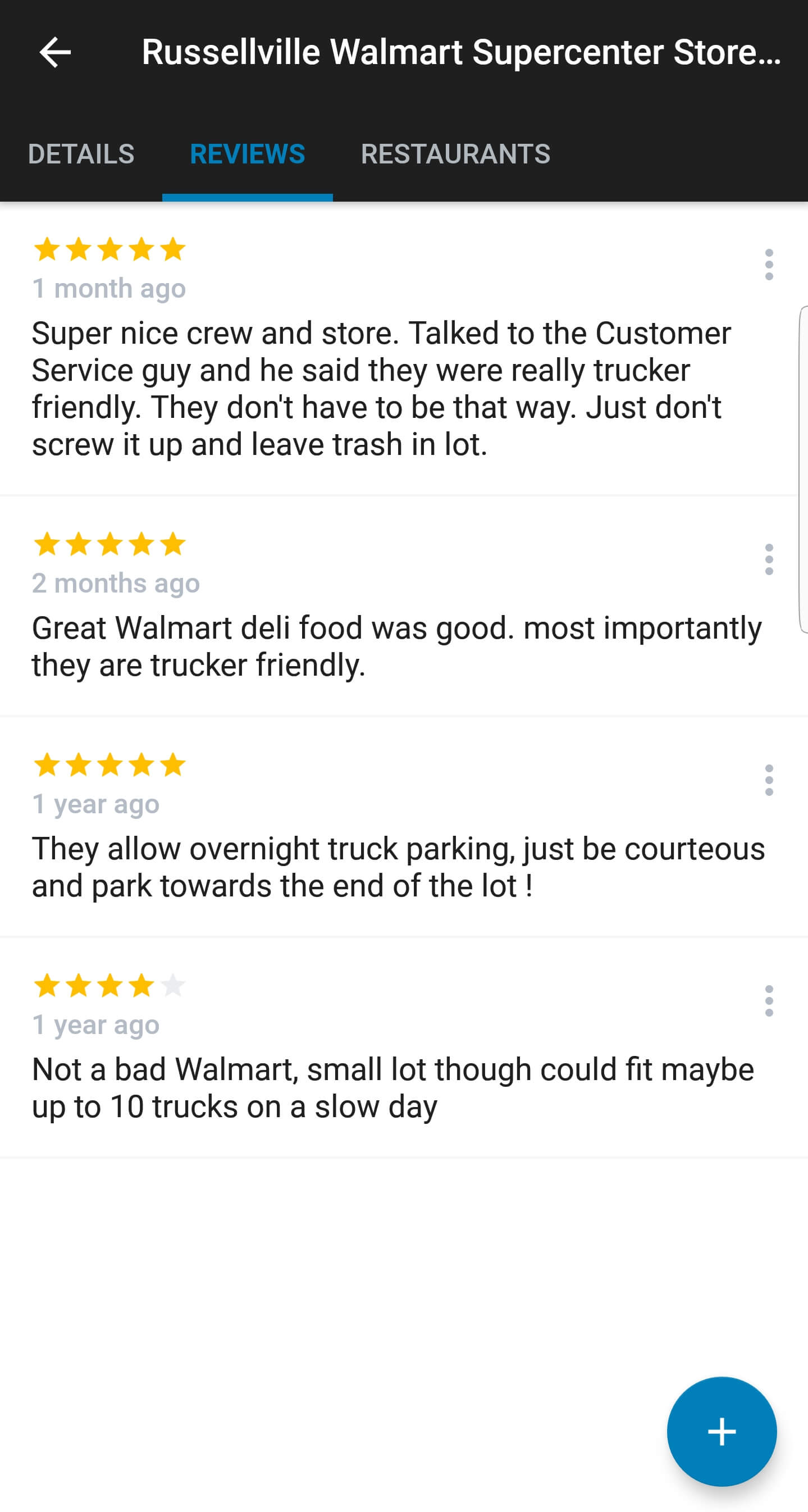
6. Click the Reviews tab at the top to see what fellow truck drivers have to say about the Walmart.


Worst Traffic Bottlenecks in America [p] Which locations landed on American Transportation Research Institutes [a href="https://app.appsflyer.com/com.sixdays.truckerpath?pid=Social Facebook"]top 100 worst traffic bottlenecks in America[/a]?[/p]
[p]Bottlenecks, no not the Budweiser kind. Rather the worst traffic bottleneck that causes extreme delays can derail a truck drivers schedule. Let's take a look at the list of places where drivers are bound to be waiting in triaffic. [/p]
[h2]1. Atlanta Spaghetti Junction[/h2]
[p]Winner winner, spaghetti dinner! After analyzing over 600,000 heavy-duty trucks, the ATRI deemed the intersection of [b]Interstates 285 and 85 North in Atlanta[/b], known as the “Spaghetti Junction” is the most congested freight bottleneck in America.[/p]
[ol]
[li]Atlanta Spaghetti Junction[/li]
[li]I-95 at State Route 4 in Fort Lee, New Jersey[/li]
[li]I-290 at I-90/94 in Chicago, Illinois [/li]
[li]I-65 at I-64/71 in Louisville, Kentucky[/li]
[li]I-71 at I-75 in Cincinnati, Ohio[/li]
[li]SR 60 at SR 57 in Los Angeles, California[/li]
[li]SR 18 at SR 167 in Auburn, Washington[/li]
[li]I-45 at US 59 in Houston, Texas[/li]
[li]I-75 at I-285 North in Atlanta, Georgia[/li]
[li]I-5 at I-90 in Seattle, Washington[/li]
[/ol]
[giphy]<iframe src="https://giphy.com/embed/3o7qE3a5YpLpCdeq0U" width="480" height="269" frameBorder="0" class="giphy-embed" allowFullScreen></iframe>[/giphy]
[h2]Which State Has the Worst Bottlenecks?[/h2]
[p][b]Texas has the most bottleneck of any state[/b], with nine locations ranked among the top 50 worst. Washington has six locations in the top 50, California has five – primarily in the Los Angeles area, while Georgia has four.[/p]
[h2]Which City Has the Worst Bottlenecks?[/h2]
[p]Staying in the Lone Star state, the city with the worst bottleneck congestion is [b]Houston[/b]. Not only does Houston have three locations in the top 15, it has six in the top 40. Seattle is another city with major bottleneck traffic congestion with five locations on the top 100 list.[/p]
[h2]Difference Between Traffic Jam and Bottleneck[/h2]
[p]A bottleneck differs from a traffic jam because a bottleneck is caused by a road design or flaw in the timing of traffic lights. Bottleneck traffic can be limited if there is a proper redesign of the roadway, something that is extremely costly and time-consuming. The most common causes of bottlenecks are:[/p]
[ul]
[li]Traffic Interruption – the most common causation of bottleneck traffic that includes railway crossings, tolls, stop signs or traffic lights.[/li]
[li]Lane Reduction – a merge caused by the reduction in the number of lanes.[/li]
[li]Merging – specifically when two major highways intersect.[/li]
[/ul]
[p]American Trucking Association President Chris Spear sees the results of the ATRI study as an indication of infrastructure issues that the Trump Administration should address.[/p]
[quote]“With President Trump expected to press for significant long-term infrastructure spending, this ATRI analysis should be a key guide for deciding what projects are worthy of funding,” Spear said. “Ensuring the safe and efficient movement of goods should be a national priority and this report draws attention to the places where our highway network needs improvement in order to meet that goal.”[/quote]
[giphy]<iframe src="https://giphy.com/embed/2bgR8ybgyJU6Q" width="480" height="269" frameBorder="0" class="giphy-embed" allowFullScreen></iframe>[/giphy]
[button-white href="http://atri-online.org/wp-content/uploads/2017/01/2017-ATRI-Bottleneck-Brochure.pdf"]Full List[/button-white]
Trucker Safety and Health Tips
[p]It can be incredibly tiring driving for long durations of time, especially if you are delivering goods far
away. You have to be very careful about managing stress and maintaining good health while on long routes. The healthier you are, the more focused you will be, and that will result in efficient goods delivery. Ultimately, taking care of your health and safety will have a positive effect not only on your lifestyle but also on your work.[/p]
[p]We are celebrating World Safety and Health Day this week to raise awareness for your well-being. It’s a day
most relevant for all workers especially truckers, who spend a big part of their life on the road. Here are a few health and safety tips for you so you can stay in top shape and reduce risks from your day to day trucking.
[/p]
<h2></h2>
[p][b]Wear the Seatbelt[/b][/p]
[p]Wearing the seatbelt is essential for every driver, especially for a trucker, because trucks are involved in a lot more accidents than cars. You have to wear the belt even though most of the time you drive slow. Safety should be your priority, no matter the situation.[/p]
<h2></h2>
[p][b]Take Lots of Rest[/b][/p]
[p]As a truck driver, your job is very demanding. It is not easy to drive constantly for hundreds of miles.
Your body needs rest and some time to recuperate. Therefore, take a nap whenever you get the time and check in to a nice motel, whenever possible. Nothing beats a good night's sleep, so make sure you are not skipping too many rest stops.[/p]
<h2></h2>
[img src="https://truckerpath.com/uploads/2021/04/202104-TP-BLOG-WorldHealthSafety-2.jpg" alt=""]
<h2></h2>
[p][b]Don’t Forget to Eat and Hydrate[/b][/p]
[p]A lot of times, truckers forget to fill their belly with nutritious food and water. The human body needs constant energy to function. Therefore, you should keep some snacks and a big water bottle by your side. It is better to eat small snacks while you are engrossed in driving as this way you can meet the deadline and keep yourself healthy.[/p]
<h2></h2>
[p][b]Inspect Your Truck[/b][/p]
[p]They say that you can save yourself a lot of trouble if you inspect your vehicle before driving. For truck
drivers, this is very true. You have such a large vehicle, with so many moving parts, it presents its challenges. Moreover, if anything goes wrong, you will hurt yourself and others around you. Therefore,
it's good practice to do pre-trip inspection. Check the tires, the warning signs, the engine, and other vital components of your rig before heading out on your journey.[/p]
<h2></h2>
[img src="https://truckerpath.com/uploads/2021/04/202104-TP-BLOG-WorldHealthSafety-3.jpg" alt=""]
<h2></h2>
[p][b]Socialize When Possible[/b][/p]
[p]Humans are social animals that require regular interaction to stay sane. As a trucker, you are alone most of the time, away from friends and family. The loneliness can take a toll on your mental health. Hence, try to make a few new friends at rest stops. It helps to talk to other people, maybe drive in groups to keep in touch with each other on the cb radio. If you are missing your family, talk to them on the phone or get them on a video call. Talking to your dear ones can rejuvenate your soul and boost your mood. Keep in mind all these tips and follow them as much as possible to stay safe and healthy while driving.[/p]
[p]Do you have any safety and wellness tips to share? Comment below.[/p]
<h2></h2>
<h2></h2>
[p][b]By Aldous Aldwin[/b][/p]
Truck Freight Rates [h2] Truck Freight Rates [/h2]
[p]Before getting into the details surrounding truck freight rates and how owner-operators can find the best one, it's important to understand what is a good truck freight rate and how are rates determined.[/p]
[h2]What is a Truck Freight Rate? [/h2]
[p]A Truck freight rate is simply the price or rate a broker or shipper is willing to pay a carrier to haul a load. Essentially, it's what you will be paid to haul a load. Our focus here is regarding truck freight rates for owner operators and carriers with authority. [/p]
[h2] Where Can I Find Truck Freight Rates? [/h2]
[p]You can find truck freight rates on load boards like <em>Truckloads</em>. Search over three million monthly truck loads and filter your results based on location, trailer type, weight, pick up/drop off date and more. Use Truckloads free load board to view a freight broker's credit rating, days to pay and call brokers directly from the mobile app to book the best freight rate for you! [/p]
[button text="Try Truckloads Today" href="https://truckerpath.com/truckloads/free-load-board//?utm_source=blog&utm_medium=truckfreightrate" width="250px"]
[video id="snyBYpnuhWw"]
[h2] How are Truck Freight Rates Calculated? [/h2]
[p]Truck Freight rates are calculated based on a variety of factors including the current market conditions, demand levels, overall weight or size, distance traveled and the type of goods being shipped. Certain routes and areas will offer higher freight rates because the supply of loads is so great, therefore the need for carriers will be higher.[/p]
[p]Keep in mind that truck freight rates are often set by a<a href="https://truckerpath.com/blog/what-is-a-freight-broker/"> freight broker </a> who takes a portion of the total rate a shipper is willing to pay and pays the carrier the difference. This rate is often negotiable and can fluctuate. [/p]
[p]If a shipper is sending valuable equipment that is extremely heavy, chances are the freight rate is going to be very favorable for carriers. [/p]
[p]Since the truck cargo that needs to be shipped is valuable, there is additional desire to find qualified carriers. Of course, you'll need to have the right equipment and trailer necessary to haul the specific load. [/p]
[giphy]<iframe src="https://giphy.com/embed/3o7btPCcdNniyf0ArS" width="480" height="268" frameBorder="0" class="giphy-embed" allowFullScreen></iframe>[/giphy]
[h2] What Loads Pay the Best Truck Freight Rate? [/h2]
[p]In order to maximize your earnings, you'll benefit from hauling loads with the best freight rate as often as possible. Freight rates are typically paid by the mile and can range from $1.50 to upwards of $4.00 or more per mile. Typically, the best freight rate is for flatbed loads but this is not necessarily always the case. [/p]
[p]We surveyed over 150 experienced <a href="https://truckerpath.com/blog/how-to-become-an-owner-operator/">owner-operators</a> asking them what they think are the best freight rates. 59 percent considered $3.00 per mile the best rate for carriers while 32 percent said $2.00 was a fair freight rate.[/p]
[p]While these are ideal freight rates for the carrier, they are often times difficult to find in most areas and the volume of freight shipping at these rates can also be limited. [/p]