Use the Trucker Path Trip Planner tool to plan your route beforehand – saving truck drivers like you precious time and potential earnings.
Between HOS rules, ELDs, overcrowded truck stops, and dock time restrictions, planning ahead is a must in order for truck drivers to be successful. We’ve surveyed over 3,300 truck drivers and over 40 percent say they spend an hour or more searching for truck parking.
That’s why using Trucker Path Trip Planner feature is an essential tool to save you time and deliver you peace of mind while you deliver loads.
Steps:
1. Open the Trucker Path app
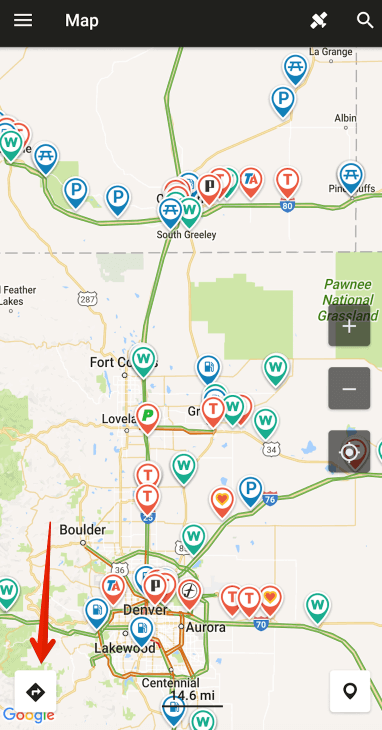
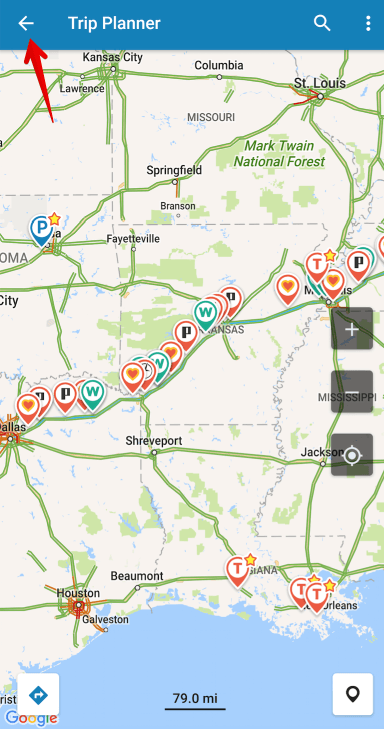
2. To plan a trip, click the diamond with the arrow on the bottom left
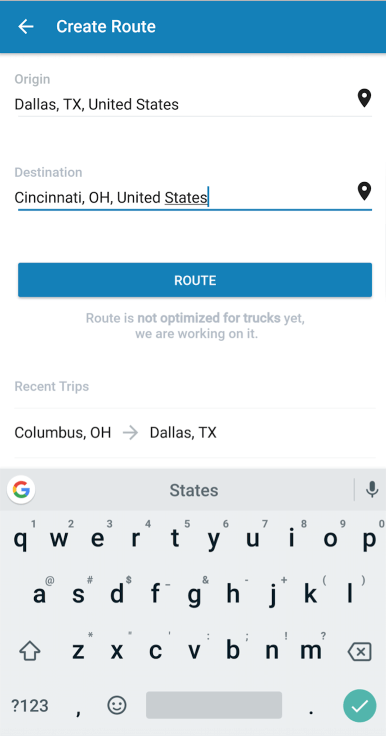
3. Fill out your origin and destination, then click ROUTE
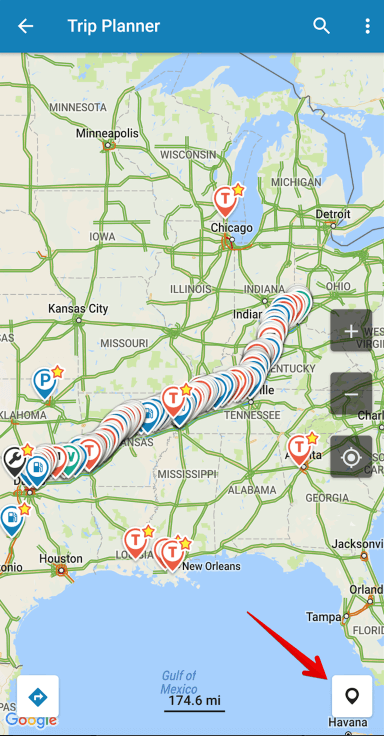
4. Click the places icon on the bottom right to filter out which locations you want to appear on the map
5. Click the icons of locations to deselect them and hide them from the map
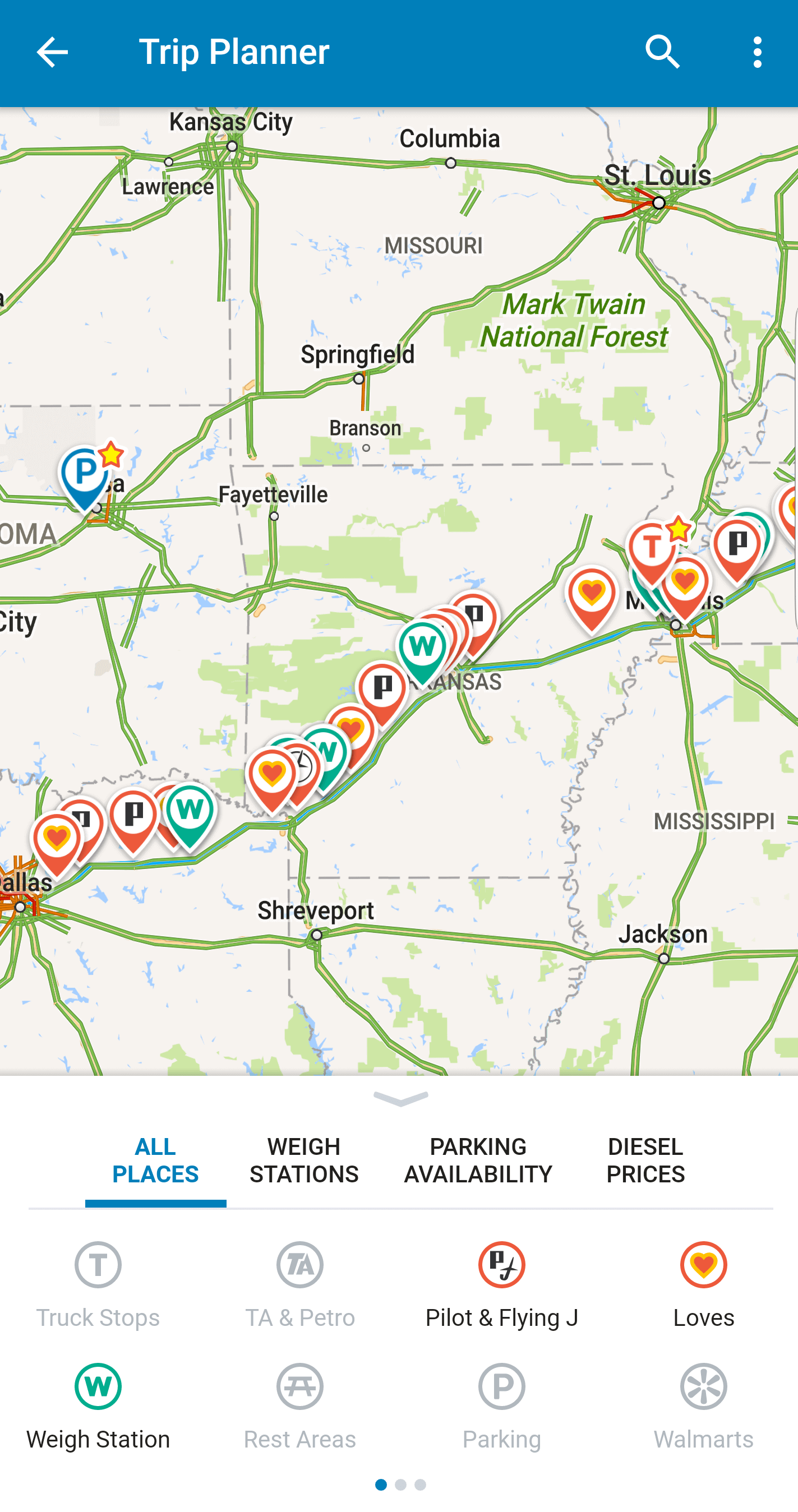
6. To Exit Trip Planner and return to the Home Map Screen, click the arrow at the top left





COVID19: State of Trucking <h4>By Trucker Path</h4>
<h3></h3>
<h3></h3>
<img src="https://truckerpath.com/uploads/2020/05/b5.png" alt="Trucker Path COVID19" />
<h3><strong>Trucker Path COVID-19 Initiatives</strong></h3>
The Trucker Path team is actively monitoring the spread of the Coronavirus (COVID-19) and preparing resources to assist truckers as they help keep America running.
<h2></h2>
In addition to providing updates on the Trucker Path <a href="https://www.facebook.com/TruckerPath/">Facebook Page</a>, a dedicated COVID19 thread has been created in the official Trucker Path forum.
<h2></h2>
A COVID-19 Tracker has been introduced on the Trucker Path mobile app which is available on <a href="http://bit.ly/truckerpathios">iOS</a> and <a href="http://bit.ly/truckerpathdroid">Google Play</a>. This feature will enable truckers to easily check the spread of the Coronavirus and see insights both for America and abroad, with live updates on infections and recoveries.
<h2></h2>
Along side the COVID-19 Tracker is the COVID-19 Navigation Tool which has been integrated on the Turn-by-Turn feature to track the latest information regarding reported cases and infected areas and provide alternate routing.
</a>
<h2></h2>
<h2></h2>
<img src="https://truckerpath.com/uploads/2020/05/b7.jpeg" alt="FMCSA" />
<h3><strong>FMCSA Emergency Declaration to be extended until June 14</strong></h3>
The agency's COVID-19 Emergency Declaration has been extended until June 14. The original declaration was set to expire last Friday.
Full announcement can be found <a href="https://www.fmcsa.dot.gov/emergency/extension-expanded-emergency-declaration-no-2020-002-under-49-cfr-ss-39025">here</a>.
<h2></h2>
FMCSA’s emergency declaration provides for regulatory relief for commercial motor vehicle operations providing direct assistance supporting emergency relief efforts intended to meet immediate needs for:
Medical supplies and equipment related to the testing, diagnosis and treatment of COVID-19
Supplies and equipment necessary for community safety, sanitation, and prevention of community transmission of COVID-19 such as masks, gloves, hand sanitizer, soap and disinfectants
Food, paper products and other groceries for emergency restocking of distribution centers or stores
Immediate precursor raw materials — such as paper, plastic or alcohol—that are required and to be used for the manufacture of essential items
Fuel
Equipment, supplies and persons needed to establish and manage temporary housing or quarantines
Persons designated by federal, state or local authorities for medical, isolation, or quarantine purposes
Persons necessary to provide other medical or emergency services
</a>
<h3></h3>
<h2></h2>
<img src="https://truckerpath.com/uploads/2020/05/b6.jpeg" alt="CDC" />
<h3><strong>CDC Guidelines for Long Haul Truck Drivers</strong></h3>
The Center for Disease Control and Prevention has recently updated guidelines for long haul truck drivers in the wake of the COVID-19 pandemic.
Here are some prescribed steps to avoid contamination and reduce spread.
<ul>
<li>Notify your supervisor and stay home if having symptoms.</li>
<li>Make a plan with your employer and your family as to what to do if you become sick while you’re on the road. Include where to stop, where and how to seek medical advice and treatment, and plans for freight delivery.</li>
<li>Limit close contact with others by maintaining a distance of at least 6 feet when possible.</li>
<li>CDC recommends wearing cloth face coverings in public settings where other social distancing measures are difficult to maintain, especially in areas of significant community-based transmission. </li>
<li>Clean and disinfect frequently touched surfaces on a routine basis.</li>
<li>Practice proper hand hygiene. This is an important infection control measure. Wash your hands regularly with soap and water for at least 20 seconds, or use an alcohol-based hand sanitizer containing at least 60% alcohol.</li>
<li>Avoid touching surfaces often touched by others when outside of the cab.</li>
<li>Do not share personal protective equipment (PPE) (such as vests, safety glasses, hard hats),tools, phones, radios, or other personal items.</li>
<li>Use pre-qualified truck stops or hotels identified by your employer as having appropriate COVID-19 protections.</li>
<li>When team driving or ride-alongs are required, wear cloth face coverings inside the truck and avoid sharing bedding in the sleeper berth.</li>
</ul>
Full guidelines can be viewed <a href="https://www.cdc.gov/coronavirus/2019-ncov/community/organizations/long-haul-trucking.html">here</a>.
Nebraska Troopers Ride With Truckers to Spot Unsafe Drivers
[p]Tired of truck drivers wrongfully receiving blame from the public regarding safe driving? Well, Nebraska's “[a href="https://app.appsflyer.com/com.sixdays.truckerpath?pid=Social Facebook"]Trooper in a Truck[/a]” is sure to help change that misconception.[/p]
[h2]Nebraska Trooper in a Truck Program[/h2]
[p]According to the [a href="https://www.facebook.com/NebraskaTruckingAssociation/posts/1489487991094045"]Nebraska Trucking Association[/a], Nebraska State Troopers will ride along in the cabs of commercial motor vehicles while looking for unsafe driving behavior from nearby automobiles. When a trooper spots someone committing a violation or driving recklessly, they will radio a nearby trooper to assess a citation.[/p]
[p]“Having eyes in commercial motor vehicles allows us to see things we wouldn’t normally see from a marked patrol unit,” said Lieutenant Kurt Von Minden. “It’s also an invaluable tool to work with truckers to help tackle the issue of public safety on our roadways. We’re very grateful for the relationship we have with the [a href="https://app.appsflyer.com/com.sixdays.truckerpath?pid=Social Facebook"]trucking industry[/a] and value their help.”[/p]
[h2]80 Percent of Accidents are Caused by Cars, Not Trucks[/h2]
<iframe style="border: none; overflow: hidden;" src="https://www.facebook.com/plugins/video.php?href=https%3A%2F%2Fwww.facebook.com%2FTruckerPath%2Fvideos%2F1045972602215688%2F&show_text=1&width=560" width="560" height="463" frameborder="0" scrolling="no"></iframe>
Truck Driver Turnover Rate Rapidly Increased [p]The truck driver turnover rate rapidly increased to its highest mark in the last seven years in the second quarter of 2017. [/p]
[h2] Truck Driver Turnover Rate [/h2]
[p]According to American Trucking Associations' quarterly report, the turnover rate at large truckload carriers in the second quarter of 2017<strong> jumped 16 percentage points to 90 percent</strong> – the highest it has been since the final quarter of 2015. [/p]
[p]The 16-point increase is the largest quarterly jump in truck driver turnover rate since the fourth quarter of 2010.
[/p]
[quote]"We saw double-digit gains in the annualized turnover rate for both small and large truckload fleets,” said ATA Chief Economist Bob Costello. “After a period of relatively low turnover, it appears the driver market is tightening again, which coupled with increased demand for freight movement, could rapidly exacerbate the driver shortage.”[/quote]
[p]The ATA report also revealed turnover numbers for smaller fleets. Smaller carrier companies with $30 million in annual revenue or less saw aneven higher turnover rate increase. For them, the turnover rate increased by 19 percentage points to 85 percent, the highest it has been since the first quarter of 2016. [/p]
[p]The turnover picture at less-than-truckload fleets was more muddled, with over-the-road LTL turnover dipping one point to 9 percent, says the ATA. [/p]
[quote]“We predicted that last year’s period of relatively low and stable turnover could be short-lived if the freight economy recovered from 2016’s freight recession,” Costello said. “It appears those predictions were correct and we may be seeing the beginnings of a significant tightening of the driver market and acceleration of the driver shortage.”[/quote]
[h2]Truck Tonnage Trending Up [/h2]
[p] Despite the high truck driver turnover rate and impeding driver shortage, <strong>Truck Tonnage Index jumped 7.1 percent in August</strong> and year-to-date, compared with the same eight months in 2016, the index is up 2.1 percent, says the ATA. Costello partially correlates the increases in August to Hurricanes Harvey and Irma. [/p]
[p] The <a href="https://truckerpath.com/blog/trucking-industry-trends/">trucking industry is trending</a> up still, with 2016 truck freight tonnage up 1 percent or 500 million tons from 2015. [/p]
[p] If you're a truck driver and are ready to make the jump to start your own trucking company, the timing might be right. [/p]
[button-green href="https://truckerpath.com/blog/how-to-start-a-trucking-company/"]How to Start a Trucking Company[/button-green]