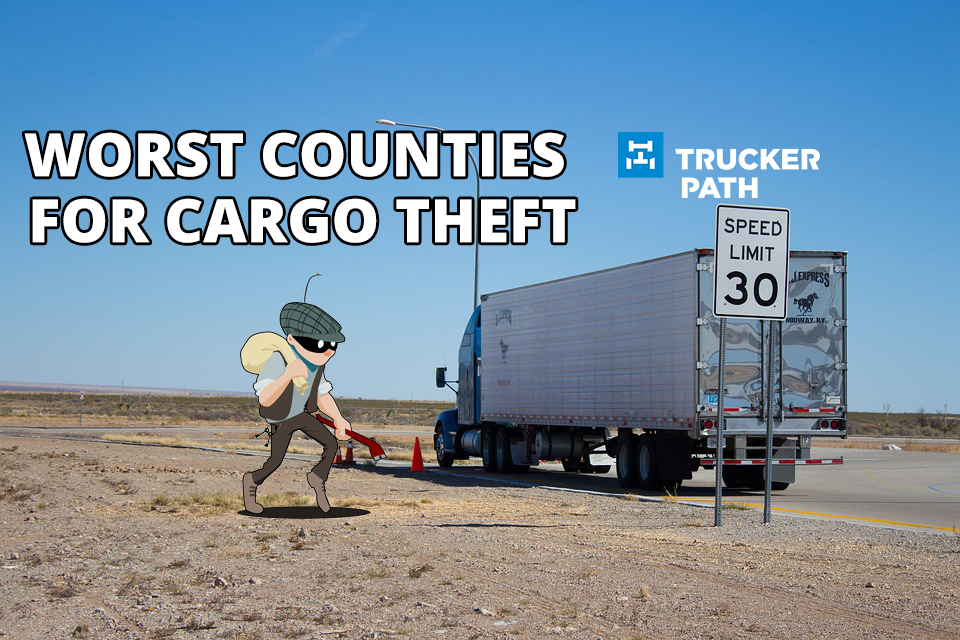
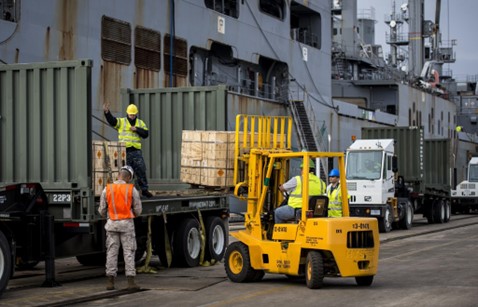
Cargo theft is a growing concern for the trucking industry with driver safety at the forefront. Here’s a closer look at the worst areas.
Being a truck driver is the most dangerous job in America and the threat of cargo theft from potentially armed thieves looking to steal truck cargo escalates the risks for truck drivers.
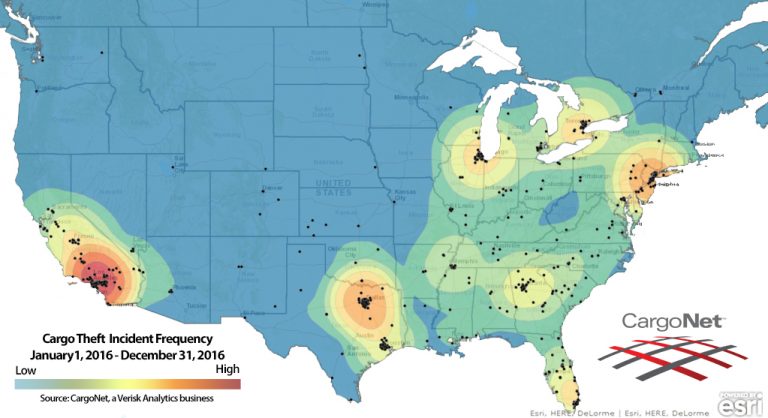
According to CargoNet, there were 836 occurrences of cargo theft resulting in an estimated $172.9 million in losses during 2016. Los Angeles County had 329 thefts reported from July 2013 – July 2016, the most of any other county in America. The worst state for cargo thefts was California, with 228 thefts, an increase of 36 percent from 2015. The most common day of the week for cargo thefts was Friday with 164 incidents. There was a 5.1 percent decrease in total cargo thefts in 2016 compared to 2015.

Best of all you can see how many truck parking spots a truck stop has and see if there are any available in real-time. Download our free app today in order to save yourself time and provide you with the peace of mind you deserve.
“Cargo theft continues to be a pervasive issue,” said Anthony Canale, general manager of CargoNet. “Our 2015 year-end report indicated 881 incidents of cargo theft took place across North America. That increased from 844 cargo thefts reported in 2014 and accounted for more than $175 million in goods. While thieves continue to get more tech-savvy with their approaches, there are measures that can be put in place to stop them, ranging from proactive deterrence tactics to extensive recovery assistance.”


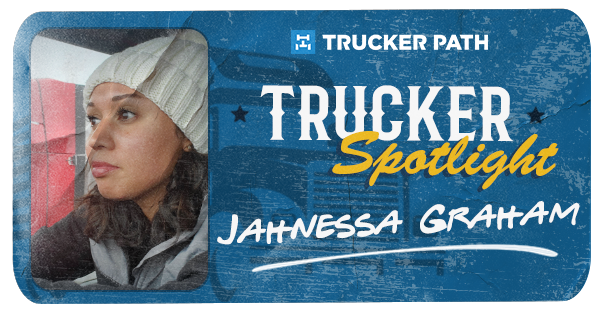
Trucker Spotlight - Jahnessa Graham <em>The Trucker Spotlight series explores the lives of truckers and their journey to make a difference in their industry. We interview different truck drivers to understand some life lessons that make them who they are today. We also learn more about their motivations, and the problems that they encounter on the job. We also tackle how Trucker Path's solutions helped them with what they do. The information that they provide helps inform other people who are looking to delve into the trucking world.</em>
<h2></h2>
[img src="https://truckerpath.com/uploads/2021/04/202102-BLOG-TP-TS_Jahnessa-Graham-2.jpg" alt=""]
<h2></h2>
Today we are putting the spotlight on <strong>Jahnessa Graham</strong>, who's Tucsonan born and raised; ‘Bear Down!’ Her dream back in school was to become a fashion designer or pursue a criminal justice degree. Upon graduating, she
ventured out on her own at 18, worked the dead-end jobs, secured her own apt, and went to college for a while; basically, getting by. Molding a life without a game plan and at 22 years old, a series of events led her to pursue a CDL. Let's get to know "Jahnessa" and how trucking came into her life.
<h2></h2>
<h3></h3>
<h3><strong>What made you decide to be a trucker?</strong></h3>
It began with me selling everything, I had to move into a truck for 5 months. I assisted in hand unloading freight for ‘Dollar Tree’. I was the spotter for backing, handled paperwork and Qualcomm messages, as well as set up equipment for unloads. I absolutely loved the work, so I decided to move back home. I sat with my class D for a year and in March of 2018 made the move to attend CDL school.
<h2></h2>
[img src="https://truckerpath.com/uploads/2021/04/202102-BLOG-TP-TS_Jahnessa-Graham-3.jpg" alt=""]
<h2></h2>
<h3><strong>In the years that you have been driving, what are the significant changes that you've noticed in the trucking industry?</strong></h3>
Coming up on three years in the industry, technically I am still a rookie driver, so I have not had to experience too much change. Starting out, there was a lot of disdain towards switching from paper logs to ELD’s as many truckers complained about the severe restraint on our work week and ability to break when needed. I have noticed that new recruits are coming into the industry typically have more and more negative opinions/attitudes towards other drivers and office personnel. Another issue is the ever-changing regulations regarding our HOS laws. I think having people
who have no experience in a semi, creating rules that hinder our work and health can prove harmful to drivers.
<h2></h2>
[img src="https://truckerpath.com/uploads/2021/04/202102-BLOG-TP-TS_Jahnessa-Graham-4.jpg" alt=""]
<h2></h2>
<h2></h2>
<h3><strong>What are some things you dislike about being a truck driver?</strong></h3>
Oh man, there is a lot! Here are my top five dislikes about the job:
<h2></h2>
<li>4 wheelers</li>
<li>Disrespect from shippers, receivers, and office folk</li>
<li>Skirting the rules to make a living</li>
<li>Lack of communication</li>
<li>Constant stress</li>
<h2></h2>
Don’t get me wrong, I enjoy what I do and I’m great at it, but sometimes I think the cons outweigh the pros.
<h2></h2>
<h3><strong>What attributes must one have in order to be a successful truck driver?</strong></h3>
Definitely patience. There will always be something or someone who throws a monkey wrench in your plans so be prepared to have your time wasted. I feel like common sense plays a big role out here on the road and I would say in most situations that includes having the ability to make split second decisions. A professional driver must be able to interact with a variety of people and will show restraint when necessary. It is not a contest of egos! Lastly, one must have an excellent work ethic as simply doing the bare minimum will not get you anywhere. This industry is not for everyone and there is nothing wrong with that. However, in order to succeed, I believe these to be the best attributes to do so.
<h2></h2>
[img src="https://truckerpath.com/uploads/2021/04/202102-BLOG-TP-TS_Jahnessa-Graham-5.jpg" alt=""]
<h2></h2>
<h3><strong>What's the most memorable experience you've had while over the road?</strong></h3>
I will always remember the first time I got 'the signal'. It had to have been my first or second load solo when I was rolling through a small Arizona town one afternoon and I saw two boys walking home from school. They lifted their arms and gave a couple yanks on an invisible cord, aka the air horn signal. I was so excited and happy but sadly I could not blow the horn in such a small town off the highway no less. I still feel bad to this day, so I try to give kids and adults the pleasure of my airhorn whenever I get the signal.
<h2></h2>
<h3><strong>What's your favorite Truck Brand / Model? </strong></h3>
I really prefer Freightliner, Cascadia. It has been my main truck since the beginning, and I have come to enjoy it. Plus, the parts are plentiful which makes maintenance less of a hassle.
<h2></h2>
<h3><strong> Aside from being a trucker, any other things you dream of doing?</strong></h3>
As of lately I am thinking about starting up a food truck operation in conjunction with a new truck stop in Tucson, AZ. As a trucker I know that parking is hard to find, so being able to provide safe, easy parking along with homemade cooking is sure to please many drivers. I have also thought about obtaining my CDL instructors cert. and start a defensive driving school for both commercial and non-commercial drivers. I have mush to think about, but I am sure whatever I choose will be worth it.
<h2></h2>
[img src="https://truckerpath.com/uploads/2021/04/202102-BLOG-TP-TS_Jahnessa-Graham-6.jpg" alt=""]
<h2></h2>
<h3><strong>What's the best truck stop for you?</strong></h3>
I love Pilot/Flying J and TA. They both seem to reign supreme in terms of food selection and showers. TA also tends to have adequate parking and maintenance shops.
<h2></h2>
<h3><strong>What was the worst breakdown or setback you've experienced while OTR?</strong></h3>
The worst breakdown I have had was with Navajo Transport, as a company driver. I was climbing a mountain in California when my truck suddenly lost all power, and my dash gauges were going crazy! I pulled off on the shoulder three times before barely managing to pull off on a small dirt cutout about 25 feet from the highway. After many calls to dispatch and breakdown, I was told that a tow was on the way. I sat from 10am until 12:30 am in the middle of summer waiting for a tow. The other employees I spoke with did not seem to care about who took care of the situation and I did nit hear back from them for hours. It was not a great day.
<h2></h2>
<h3><strong>We're glad that you use the Trucker Path on your day to day trucking. What features do you enjoy the most?</strong></h3>
The <a href="https://sixdays.page.link/tLUu">Trucker Path</a> features I enjoy the most are Having the 7-day parking prediction is great! It is better for me to gauge whether a stop is going to be open for me based on specific times of the day. Truck stop details tabs allow me to choose where I stop based on food selections and amenities which I am grateful for. I am a sucker for Popeyes and Arby’s right now! Another thing that impressed me from the start was attention to detail, specifically addresses and contact info. I can call ahead to ask for information, update my truck GPS to find a specific place quickly, and see hours of operation. Everything I need in one place that is easy to access is always a plus as a trucker!
<h2></h2>
<h3><strong>What are some tips that you would like to share for aspiring truckers?</strong></h3>
An important tip is to be one-hundred percent sure of your decisions as there is little room for mistakes and lots of room for big consequences. The mark of a true professional is given by how one overcomes challenges. I can say firsthand that the more effort you put into acknowledging and fixing mistakes as they happen, will make you a more conscious and skilled driver down the road. New drivers, please take anyone’s advice with a grain of salt and do what makes you comfortable because at the end of the day it is your decision that affects your job and life out here. Lastly, make the best of what you have and do not let the stress weigh you down or knock you out. You got this!
<h2></h2>
[img src="https://truckerpath.com/uploads/2021/04/202102-BLOG-TP-TS_Jahnessa-Graham-7.jpg" alt=""]
<h2></h2>
<h3><strong>Where can people watch your videos on Youtube?</strong></h3>
They can view my videos on my Youtube Channel, <a href="https://www.youtube.com/channel/UCvj3_Y1_JHOwX3sZIKDsgPg/videos">Peaches N Grease</a>.
<h2></h2>
<iframe width="560" height="315" src="https://www.youtube.com/embed/0cZ6qldVXzs" title="YouTube video player" frameborder="0" allow="accelerometer; autoplay; clipboard-write; encrypted-media; gyroscope; picture-in-picture" allowfullscreen></iframe>
<h2></h2>
Hope you guys enjoy!
<h2></h2>
<h2></h2>
<h4>By Aldous Aldwin</h4>
<h3></h3>
<h3></h3>
Spot Rates Fell Again Last Week: How Owner-Operators Can Screen Loads More Carefully in a Seasonal Dip <em>Published July 24, 2026</em>
<p>Spot truckload rates slipped again last week, and both FTR and Truckstop called it seasonal — not a collapse. When rates soften this way, freight selection matters more than speed, because a weak reload or slow-paying broker can do more damage than a slightly lower outbound rate. Here is how owner-operators can screen loads smarter when the market gives less room for mistakes.</p>
<h2>Why Does a Seasonal Dip Make Load Screening More Important?</h2>
<p>Seasonal dips happen. The problem is not that rates cool off for a week or two. The problem is what happens next when a carrier chases freight without looking at the full trip, the reload market, or who is actually posting the load.</p>
<p>FTR and Truckstop both described the latest move as seasonal. That gives drivers an important clue. This kind of week does not automatically mean freight disappears — it means the market gives less room for mistakes. One decent outbound load can still turn into a rough week if the reload is thin, the deadhead stretches out, or the broker pays slow. Most owner-operators do not get hurt on one bad decision. They get hurt on two or three small ones stacked together.</p>
<h2>How Do Owner-Operators Screen Loads When Spot Rates Soften?</h2>
<p>In a soft market, load screening gets more important than load volume. A lot of posted freight looks workable at first glance, but the details tell the real story. Lane, reload options, broker history, and total trip math all matter more when margins are thin.</p>
<ol>
<li><strong>Look at the full lane, not just the first leg.</strong> A load out of a decent market can still be a problem if it dumps a truck into a weak reload area. Rate Check helps add lane context before a driver starts negotiating off a headline number alone.</li>
<li><strong>Check deadhead on both sides.</strong> Short loaded miles with long unpaid repositioning can wreck an otherwise decent-looking run. In a softer week, even an extra reposition can wipe out what looked like a fair load.</li>
<li><strong>Check who posted it and how they pay.</strong> In a softer week, waiting longer to get paid hurts more because every trip carries more pressure. Broker credit scores and days-to-pay reports give another screen before a call goes too far.</li>
</ol>
<p>That is where selectivity beats speed. Freight still moves in seasonal dips, but it pays to sort harder and call on loads that fit the truck, the week, and the next reload.</p>
<p>A realistic example: a van load that looks fine on the first leg can still go sideways if it delivers into a weak market late in the day with no good reloads until the next morning. Another load with a similar posted rate may deliver into a busier market with more same-day options. On paper, those two loads can look close. In real life, they are not close at all.</p>
<p style="margin:24px 0;">
<a href="https://truckerpath.onelink.me/ivkh/n0eiei2g" style="display:inline-block; background-color:#0A8DD1; color:#FFFFFF; font-weight:bold; font-size:16px; padding:14px 28px; border-radius:6px; text-decoration:none;">Search Loads by Lane</a>
</p>
<h2>Which Loads Are Worth Passing on During a Seasonal Dip?</h2>
<p>A soft patch is when bad freight starts dressing up like good freight. Maybe the rate looks decent on the first call, but the delivery lands late in a weak market. Maybe the miles are short, but the pickup burns half a day. Maybe the broker needs the truck badly, which sounds good until the rate confirmation and payment terms show up.</p>
<p>Loads worth skipping often share a few traits:</p>
<ul>
<li><strong>They pull a truck into a cold backhaul market.</strong> A load can look fine on the outbound and still leave a carrier stuck hunting cheap reloads.</li>
<li><strong>They require too much unpaid setup.</strong> Long deadhead, driver assist, tight appointment windows, or excessive waiting can eat the load alive.</li>
<li><strong>They come from a broker with shaky pay habits.</strong> Driver-submitted broker credit scores and days-to-pay reports can help flag extra risk before a call gets too far.</li>
<li><strong>They do not fit the truck's week.</strong> A flatbed, reefer, van, or hotshot operation all have different lane patterns. A load that works for one setup may not work for another.</li>
</ul>
<p>Most experienced drivers do not pass on freight because they are picky for no reason. They pass because bad freight costs more in a weak market than it does in a strong one. If a load needs a lot of things to go right, it probably carries more risk than it first appears. If the pickup has tight timing, the delivery is into a weak area, and the broker has slower pay feedback — that is three pressure points on one trip. In a seasonally softer week, stacking those risks rarely helps.</p>
<h2>How Can Carriers Stay Disciplined on Backhauls Instead of Chasing the First Reload?</h2>
<p>Backhaul discipline is where a lot of profit gets saved. When spot rates dip, the first reload after delivery can feel like a lifeline. That is exactly when some carriers end up taking freight that keeps them running hard and earning less.</p>
<p>A better move is to read the market around the delivery point before the truck gets there. If outbound volume looks thin and inbound volume looks heavy, the next load may not come easy. That can change how a driver prices the first load, how far they are willing to deadhead for a reload, or whether the truck even belongs in that market this week.</p>
<p>Tools matter here because memory only goes so far. A lot of drivers know a market felt weak last time, but lane conditions shift. Looking at a load density map and a capacity indicator can help spot where freight is tighter or looser by lane and state — which gives the next decision more context than gut feel alone.</p>
<p>That same discipline helps with timing. If a truck posts capacity early, sets load alerts, and watches matching reloads before delivery, the driver gets options. Options matter when rates are soft because desperation usually shows up in the final booking.</p>
<p>Say one load gets the truck out at an okay rate, but the delivery market shows thin outbound options for that equipment. Another outbound load may pay about the same yet land in a market with better density and more likely follow-up freight. In a stronger market, either load might work. In a soft seasonal patch, the second one usually gives the week a better chance.</p>
<h2>Frequently Asked Questions</h2>
<h3>Are lower spot truckload rates always a sign of a bad market?</h3>
<p>No. FTR and Truckstop described the latest drop as seasonal, which means timing plays a role. A soft week can still have workable freight if the lane, timing, and reload plan make sense.</p>
<h3>How do drivers avoid bad backhauls when rates are down?</h3>
<p>Most carriers start by looking past the outbound load and studying the delivery market. If reload options look thin, the first load needs to carry more of the trip — or the truck may need a different lane entirely.</p>
<h3>What matters more in a soft market: rate or reload?</h3>
<p>Both matter, but reload risk often decides whether the whole trip pays off. A decent first load can turn weak fast if the truck lands where outbound freight is loose and deadhead starts piling up.</p>
<h3>Should owner-operators lower their rates right away when the weekly market turns down?</h3>
<p>A lot of experienced drivers do not rush to do that across the board. They look at the lane first, then weigh timing, total trip cost, and how strong the next move looks before changing their number.</p>
<h2>Summary</h2>
<ul>
<li>FTR and Truckstop both pointed to a seasonally weaker week — softer pricing needs smarter load selection, not panic</li>
<li>In a dip, the full trip matters more than the first rate on the screen: lane strength, deadhead, timing, and reload options all count</li>
<li>Bad backhauls do more damage in a soft market, so market selection and reload planning carry more weight than usual</li>
<li>Broker pay habits and trip details can matter just as much as the posted rate when margins get tight</li>
<li>Strong operators stay selective, keep options open, and price freight by the lane instead of reacting to one weekly headline</li>
</ul>
<p style="margin:24px 0;">
<a href="https://truckerpath.onelink.me/ivkh/n0eiei2g" style="display:inline-block; background-color:#0A8DD1; color:#FFFFFF; font-weight:bold; font-size:16px; padding:14px 28px; border-radius:6px; text-decoration:none;">Find Better Freight Now</a>
</p>
<h3>Sources</h3>
<ul>
<li><a href="https://www.ftrintel.com">FTR Transportation Intelligence — Weekly Trucking Update, July 2026</a></li>
<li><a href="https://www.truckstop.com/blog/market-demand-index/">Truckstop.com — Market Demand Index, week of July 21, 2026</a></li>
<li><a href="https://www.atri-online.org/research/operational-costs-of-trucking/">ATRI — An Analysis of the Operational Costs of Trucking, 2025 Update</a></li>
</ul>
<em>Spot rate data reflects the week of July 21, 2026 as reported by FTR and Truckstop; figures may have moved since publication.</em>
Most Popular Trucks in America [p]The top-selling and most popular truck in America might come as a surprise for some.[/p]
[h2]What's the Most Popular Truck in America?[/h2]
[p][b]1. Freightliner[/b][/p]
[p]The [a href="https://app.appsflyer.com/com.sixdays.truckerpath?pid=Social Facebook"]top-selling semi-truck in America is Freightliner[/a] selling over 190,000 trucks annually. Freightliner is the most popular truck in America making up 40 percent of the market share. In addition, Freightliner is the largest truck manufacturer in the U.S., employing over 3,000 workers at its factories in Cleveland and Mt. Holly. Founded in 1942, Freightliner is a division of Daimler, the German company that also owns Western Star and is responsible for manufacturing Mercedes-Benz.[/p]
[p]While the 2007 model is the most popular Freightliner on the market, the company is investing in the future of trucking. Last year Freightliner introduced a SuperTruck which was reported to get 12 mpg, outfitted with cutting-edge technology and a more aerodynamic style.[/p]
[video id="jgXh9Vxbx1s"]
[p][b]2. Kenworth[/b][/p]
[p]PACCAR is the parent company of Peterbilt and Kenworth with an annual revenue of $19.1 billion. Combined the two truck brands sold 154,700 trucks in 2015. The Kenworth W900 is a classic truck model with a distinguished long-nose hood and pumps out nearly 600 horsepower. Kenworth edged out Peterbilt by a slight margin in sales, holding 14 percent of the market share in America for 2015.[/p]
[p]<iframe style="border: none; overflow: hidden;" src="https://www.facebook.com/plugins/video.php?href=https%3A%2F%2Fwww.facebook.com%2FTruckerPath%2Fvideos%2F1068498406629774%2F&show_text=0&width=560" width="560" height="315" frameborder="0" scrolling="no" allowfullscreen="allowfullscreen"></iframe>[/p]
[p][b]3. Peterbilt[/b][/p]
[p]Peterbilt is an iconic brand in the American trucking industry. Its popularity has allowed the brand to cross over into everyday fashion. With its red oval-shaped logo and script white lettering, Peterbilt apparel – specifically trucker hats – can found at truck stops, retail stores and various online retailers. Peterbilt makes up 13 percent of the market share in America and is beloved by its owners. The Peterbilt 379 is one of the most popular semi-trucks on the market – just ask [a href="https://www.facebook.com/tonyjusticemusic/"]Tony Justice[/a] and his hit song.[/p]
[video id="CzfdW7JQsKw"]
[p][b]4. International[/b][/p]
[p]Navistar International has been producing trucks since it was founded in 1902. The International LoneStar model is known for its unique crosshatch grills (though not shown in the special edition video below). Navistar also has a division called Navistar Defense, which manufactures military tactical vehicles. It holds 11 percent of the market share in America.[/p]
[video id="PSr5Dr56VgE"]
[p][b]5. Volvo[/b][/p]
[p]Volvo trucks make up 10 percent of the heavy-duty truck market share in America. That's pretty substantial when you consider the competition of the American truck brands. Volvo is a Swedish manufacturer that also owns Mack Trucks – known for the Pinnacle truck series and its Granite dump trucks. Although fifth in terms of the American truck market, Volvo is the second largest heavy-duty truck producer in the world. They also happen to be the preferred choice for Jean-Claude Van Damme to practice his splits on! Precision displayed at its finest.[/p]
[p]<iframe style="border: none; overflow: hidden;" src="https://www.facebook.com/plugins/video.php?href=https%3A%2F%2Fwww.facebook.com%2FTruckerPath%2Fvideos%2F988700387942910%2F&show_text=0&width=560" width="560" height="315" frameborder="0" scrolling="no" allowfullscreen="allowfullscreen"></iframe>[/p]
[p][i](NOTE: these rankings are based on trucks sold in the U.S. during 2015)[/i][/p]
[button-green href="https://truckerpath.com/trucker-path-app/?utm_source=blog&utm_medium=mostpopulartruck"]Learn More About Trucker Path[/button-green]