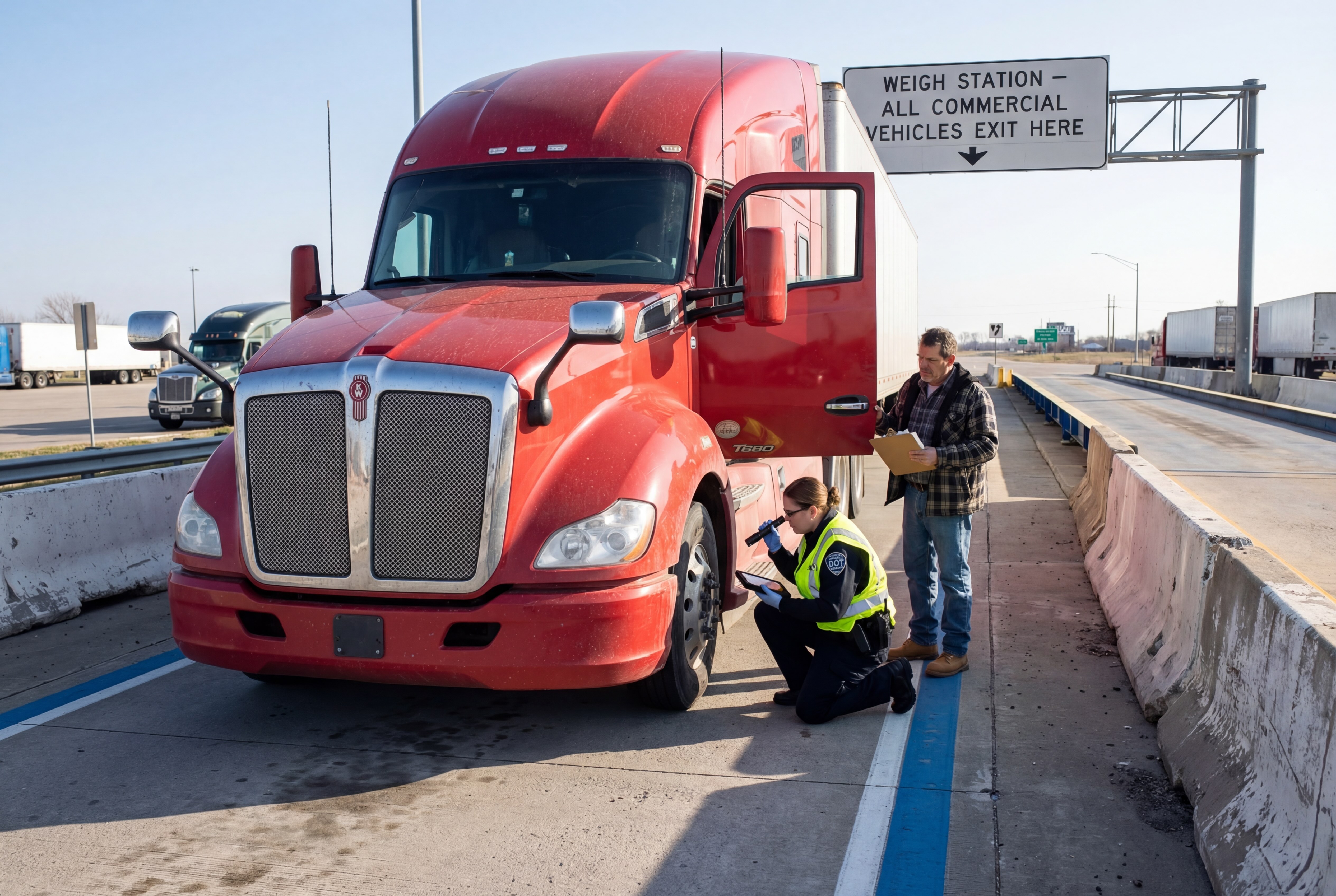
Learn the Best Strategies for When You’re StoppedStories of drivers talking their way out of citations or gaming a DOT inspection are the stuff of legends. Unfortunately, they’re usually more entertaining than useful. By the time you try the “magic words” another driver used to get off with a warning, you can be sure the officer who pulled you over has heard them a hundred times.
What truckers need are real and repeatable practices for dealing with the inevitability of being stopped and inspected. It pays to understand what happens during a stop and what you can do to protect your interests.
Inspectors’
standard process is laid out by the CVSA, but inspectors have the leeway to determine what level of inspection to administer and whether to issue violations, warnings, out-of-service orders, or tickets.
Here are some of the things truckers and carriers can do to encourage the best outcome in their dealings with the DOT.
Don’t get stopped in the first placeWith all the random reasons outside of truckers’ control for drawing an inspection, it’s important to avoid the ones within your control that can lead to a stop.
Top reasons truckers get stopped per FMCSA• Moving violations, such as speeding or following too closely
• Failing to use seat belt while operating CMV
• Using a hand-held mobile telephone while operating a CMV
• Driver on duty and in possession of a narcotic drug / amphetamine
• Failing to use hazard warning flashers
• Operating a property-carrying commercial motor vehicle while all other occupants are not properly restrained
• Using or equipping a CMV with radar detector
Avoiding restricted areas, hazards, and low bridges will also help limit exposure to law enforcement officers. Route planning is critical before every run, but make sure you’re using a
trucker-safe routing app that offers more than mapping.
Taking care of securement issues immediately and maintaining appearances are important if you want to avoid inviting an inspection. Having a dirty truck is a tell according to a DOT officer posting on
r/Truckers. ”Drivers who don’t take care of the exterior and interior of the truck tend to not take care of minor issues which then turn into bigger ones,” DOT officer, BellOfTaco3285, wrote.
Weigh stations are where many inspections are instigated, but resist the urge to bypass an open weigh station. “Where I work it’s kind of an unwritten expectation that we hangout at the weigh stations for an hour or two a day to catch by-passers,” Bell said.
The best you can do is stay fully-informed. With the Trucker Path app, you can know where weigh stations are, their open status and estimated weight time.
Whether or not trucks crossing the scales with relatively minor issues get pulled in can depend on how busy inspectors are. “Middle of the day when hundreds of trucks are coming through an hour? I have bigger fish to fry,” Bell wrote. Good insight if you’re missing a marker light or two.
What to expect during an inspectionEven when you’re doing everything right, stops are often random and even out of officers’ hands sometimes. Bell describes that after trucks pass over weigh-in-motion sensors, an automated system often decides which trucks to pull in for inspection based on a variety of reasons.
The best strategy is to keep your head down and be ready to be inspected at any time. There are eight levels of inspection
Inspections can be conducted in a variety of settings and scenarios including weigh stations, a carrier’s terminal, border checkpoints or when a law enforcement officer stops a driver. There are eight levels of inspection, five of which apply to most drivers.
Five common inspection levelsLevel I is referred to as the Standard Inspection but it involves an intensive inspection around and underneath equipment as well as administrative inspection of HOS, record of duty and all credentials
Level II is a Walk-Around Driver/Vehicle Inspection featuring a less-intensive equipment inspection focusing on visible vehicle components as well as administrative inspection of HOS, record of duty and all credentials
Level III is a Driver/Credential/Administrative Inspection that focuses on record of duty status, HOS, and required documents and does not include mechanical equipment inspection
Level IV refers to Special Inspections that typically include examination of a particular item in support of a study
Level V inspections are vehicle-only and performed without driver participation.
Officers start inspections with the paperwork. Be organized and ready to provide clear answers to questions. If you can’t provide credentials and requested information quickly, easily and confidently, officers may escalate the inspection level and rigor of their fact-finding.
Count on your ELD being a key area of focus. Bell said that he inspects drivers’ logs every stop. Know how to operate your ELD and provide requested information to the officer. Also know your HOS and have details and explanations down pat when asked.
ELD upkeep is a major focus of inspections, but problems with any of your other documents can ding you.
Documents to have organized and on hand:• Commercial driver’s license with any required endorsements
• Vehicle registration
• Vehicle insurance card
• Printout of medical examiner certification
•
Record of duty status from ELD
• Annual inspection record
• Hazardous materials paperwork if applicable
•
IFTA card if hauling interstate
• Permit credentials if applicable
• Bills of lading for the freight you’re carrying
The right attitude helpsBeing cooperative with inspectors and earnest in your desire to correct violations are good strategies. Inspectors are more likely to give a cooperative driver a break than one who’s being a jerk.
That break can make the difference between a warning and a violation, a violation and an out-of-service order, or a quick level II inspection and an intensive level I inspection.
The right attitude begins long before the cherry-top appears in your sideview mirror. Safety and compliance are achieved through habits established over time. The right attitude helps here too.
Have a strategy for preparednessIf you’ve ever been to court, you know that ignorance of the law doesn’t fly as an excuse for breaking it. That’s why it’s essential to know the rules.
Drivers are responsible for inspecting their trucks and ensuring equipment and cargo are in a safe condition. By law they are required to perform a visual
pre-trip check and complete a post-trip
DVIR (Driver Vehicle Inspection Report).
Pre- and post-trip priorities by law:• Service brakes including trailer brake connections
• Parking brake
• Steering mechanism
• Lighting devices and reflectors
• Tires
• Horn
• Windshield wipers
• Rear vision mirrors
• Coupling devices
• Wheels and rims
• Emergency equipment
Drivers do well by having a set checklist like this form provided by
FMCSA. Knowing the status of each of these areas and fixing known problems is the surest way to be ready for an unexpected DOT inspection.
Some areas attract greater scrutiny during stops, so it’s important to make sure they are prioritized and meet requirements. Results from the
CVSA 2025 International Roadcheck results reveal where authorities focus the hardest.
Top Five Vehicle OOS Violations1. Brake Systems
2. Tires
3. 20% Defective Brakes
4. Lights
5. Cargo Securement
Top Five Driver OOS Violations1. Hours of Service
2. No CDL
3. No Medical Card
4. False Logs
5. Suspended DL/CDL
The name of the game is professionalismAdministrative discipline and consistent upkeep are your best defense in the moment when you’re faced with an unexpected DOT inspection.
The good news is that there’s still time to tighten up your processes before your next inspection, even if it’s just a little.