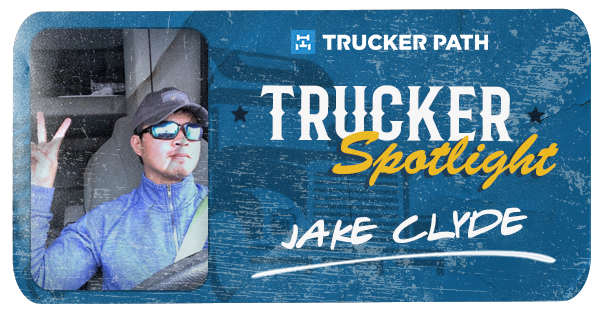
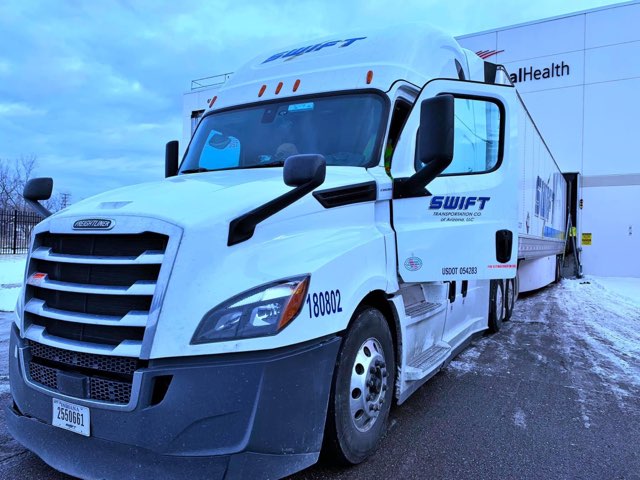
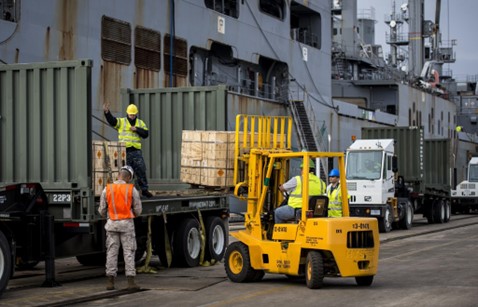
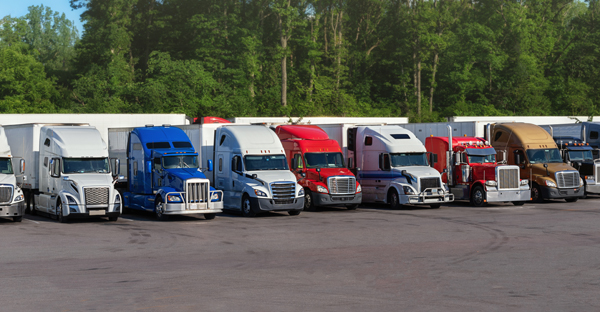
Today we are putting the spotlight on Jake, who recently started a Youtube channel “PinoyTruckerInUSA” where he shares his experiences being an over-the-road Filipino truck driver. He mostly drives in the Midwest and has been trucking for 5 years. We are stoked to get him to share some insights regarding the trucking industry.


Trucker Terms [p] If you're going to make it in trucking these are the trucker terms you'll want to remember along with some good ole trucking slang you'll hear on the CB radio. [/p]
[h2] Trucker Terms [/h2]
[p] Being a trucker is not only a unique way of life, it also comes with a unique way of communicating that only those in the trucking industry probably can decipher and understand. [/p]
[p] <strong> 10-4 - </strong> acknowledging something
[/p]
[p] <strong> 10-6 - </strong> busy right now
[/p]
[p] <strong> 10-8 - </strong> en route
[/p]
[p] <strong> 20 -</strong> location
[/p]
[p] <strong> 4-Wheeler -</strong> automobile
[/p]
[p] <strong> APU -</strong> authorized pick-up
[/p]
[p] <strong> Backhaul -</strong> retuning load to home location
[/p]
[p] <strong> Bear Trap - </strong> speed radar trap
[/p]
[p] <strong> <a href="https://truckerpath.com/blog/freight-contracts/">Bill of Lading</a> - </strong> document that details information regarding the goods being hauled by a carrier from a shipper
[/p]
[p] <strong> <a href="https://truckerpath.com/blog/what-is-a-weigh-station/">Chicken Coop</a> - </strong> Weigh Station
[/p]
[p] <strong> Chicken Lights - </strong> Added lights on and around a truck
[/p]
[p] <strong> Chocks -</strong>blocks placed in front and behind wheels to prevent truck from rolling
[/p]
[p] <strong>Cosignee - </strong>person who receives the goods
[/p]
[p] <strong>Cosignor - </strong>person who ships the goods
[/p]
[p] <strong> County Mounty -</strong> - county sheriff
[/p]
[p] <strong> <a href="https://truckerpath.com/blog/what-is-deadhead/">Deadhead -</a></strong> miles driven with no load
[/p]
[p] <strong> Dry Van -</strong>standard enclosed truck trailer
[/p]
[p] <strong> ETA -</strong> estimated time of arrival
[/p]
[p] <strong> Freightshaker -</strong> Freightliner truck
[/p]
[p] <strong> GCW (Gross Combined Weight) - </strong> combined wieght of tractor/trailer and load
[/p]
[p] <strong> Gear Jammer -</strong>speeding driver
[/p]
[p] <strong>Hammer Down -</strong> drive faster
[/p]
[p] <strong> Hopper -</strong> truck that empties load through bottom that opens
[/p]
[p] <strong> HOS -</strong>hours of service
[/p]
[p] <strong> Intermodal -</strong> shipping container freight
[/p]
[p] <strong>Jack-Knife -</strong>when trailer is pushed to the side of the tractor
[/p]
[p] <strong> K-whopper - </strong>Kenworth truck
[/p]
[p] <strong> Kingpin - </strong> pin where the axel wheel pivots
[/p]
[p] <strong> LTL (Less Than Truckload) -</strong> load less than 10,000 lbs.
[/p]
[p] <strong> Motor Carrier -</strong> person or company that is responsible for transporting goods via a commercial motor vehicle
[/p]
[p] <strong>P&D Driver -</strong> pickup and delivery driver locally
[/p]
[p] <strong>Payload - </strong>weight of the load
[/p]
[p] <strong>Peddle Run - </strong>route with lots of deliveries
[/p]
[p] <strong>Pete - </strong> Peterbilt truck
[/p]
[p] <strong>RC (Rate Confirmation) -</strong> the rate shipper or broker agrees to pay carrier to haul a load
[/p]
[p] <strong> Reefer -</strong> refridgerated truck trailer
[/p]
[p] <strong> Shiny Side Up - </strong> top of truck; don't crash or roll over
[/p]
[p] <strong> Sliding Fifth Wheel - </strong> fifth wheel that can be slid back to redistrubute weight on the axels
[/p]
[p] <strong>Trucking Authority -</strong>FMCSA approval to haul loads
[/p]
[p] <strong>Willy Weaver - </strong>drunk driver
[/p]
[h2] Using Trucker Path Along Your Route [/h2]
[p] Now that you know the trucker terms and are talking like a real driver, it's time you use a tool that most truckers rely on to help them save time and money - the <strong>Trucker Path app. </strong> [/p]
[p] Trucker Path is free to download and helps drivers: [/p]
[ul]
[li] Find truck parking with real-time updates [/li]
[li] Browse through the list of amenities a location offers [/li]
[li] Check to see if a weigh station is open or not [/li]
[li] View Walmart locations and know if they allow truck parking [/li]
[li] Compare diesel prices to save on fuel[/li]
[li] Plan their route to show locations along their trip [/li]
[li] Read through fellow drivers reviews of a location [/li]
[li] Find restaurants near truck parking locations and much more! [/li]
[/ul]
[button-green href="https://truckerpath.com/trucker-path-app/?utm_source=blog&utm_medium=truckerterms
"]Try Trucker Path Today![/button-green]
[video id="EIs5Rk6xpm4"]
Spot Rates Fell Again Last Week: How Owner-Operators Can Screen Loads More Carefully in a Seasonal Dip <em>Published July 24, 2026</em>
<p>Spot truckload rates slipped again last week, and both FTR and Truckstop called it seasonal — not a collapse. When rates soften this way, freight selection matters more than speed, because a weak reload or slow-paying broker can do more damage than a slightly lower outbound rate. Here is how owner-operators can screen loads smarter when the market gives less room for mistakes.</p>
<h2>Why Does a Seasonal Dip Make Load Screening More Important?</h2>
<p>Seasonal dips happen. The problem is not that rates cool off for a week or two. The problem is what happens next when a carrier chases freight without looking at the full trip, the reload market, or who is actually posting the load.</p>
<p>FTR and Truckstop both described the latest move as seasonal. That gives drivers an important clue. This kind of week does not automatically mean freight disappears — it means the market gives less room for mistakes. One decent outbound load can still turn into a rough week if the reload is thin, the deadhead stretches out, or the broker pays slow. Most owner-operators do not get hurt on one bad decision. They get hurt on two or three small ones stacked together.</p>
<h2>How Do Owner-Operators Screen Loads When Spot Rates Soften?</h2>
<p>In a soft market, load screening gets more important than load volume. A lot of posted freight looks workable at first glance, but the details tell the real story. Lane, reload options, broker history, and total trip math all matter more when margins are thin.</p>
<ol>
<li><strong>Look at the full lane, not just the first leg.</strong> A load out of a decent market can still be a problem if it dumps a truck into a weak reload area. Rate Check helps add lane context before a driver starts negotiating off a headline number alone.</li>
<li><strong>Check deadhead on both sides.</strong> Short loaded miles with long unpaid repositioning can wreck an otherwise decent-looking run. In a softer week, even an extra reposition can wipe out what looked like a fair load.</li>
<li><strong>Check who posted it and how they pay.</strong> In a softer week, waiting longer to get paid hurts more because every trip carries more pressure. Broker credit scores and days-to-pay reports give another screen before a call goes too far.</li>
</ol>
<p>That is where selectivity beats speed. Freight still moves in seasonal dips, but it pays to sort harder and call on loads that fit the truck, the week, and the next reload.</p>
<p>A realistic example: a van load that looks fine on the first leg can still go sideways if it delivers into a weak market late in the day with no good reloads until the next morning. Another load with a similar posted rate may deliver into a busier market with more same-day options. On paper, those two loads can look close. In real life, they are not close at all.</p>
<p style="margin:24px 0;">
<a href="https://truckerpath.onelink.me/ivkh/n0eiei2g" style="display:inline-block; background-color:#0A8DD1; color:#FFFFFF; font-weight:bold; font-size:16px; padding:14px 28px; border-radius:6px; text-decoration:none;">Search Loads by Lane</a>
</p>
<h2>Which Loads Are Worth Passing on During a Seasonal Dip?</h2>
<p>A soft patch is when bad freight starts dressing up like good freight. Maybe the rate looks decent on the first call, but the delivery lands late in a weak market. Maybe the miles are short, but the pickup burns half a day. Maybe the broker needs the truck badly, which sounds good until the rate confirmation and payment terms show up.</p>
<p>Loads worth skipping often share a few traits:</p>
<ul>
<li><strong>They pull a truck into a cold backhaul market.</strong> A load can look fine on the outbound and still leave a carrier stuck hunting cheap reloads.</li>
<li><strong>They require too much unpaid setup.</strong> Long deadhead, driver assist, tight appointment windows, or excessive waiting can eat the load alive.</li>
<li><strong>They come from a broker with shaky pay habits.</strong> Driver-submitted broker credit scores and days-to-pay reports can help flag extra risk before a call gets too far.</li>
<li><strong>They do not fit the truck's week.</strong> A flatbed, reefer, van, or hotshot operation all have different lane patterns. A load that works for one setup may not work for another.</li>
</ul>
<p>Most experienced drivers do not pass on freight because they are picky for no reason. They pass because bad freight costs more in a weak market than it does in a strong one. If a load needs a lot of things to go right, it probably carries more risk than it first appears. If the pickup has tight timing, the delivery is into a weak area, and the broker has slower pay feedback — that is three pressure points on one trip. In a seasonally softer week, stacking those risks rarely helps.</p>
<h2>How Can Carriers Stay Disciplined on Backhauls Instead of Chasing the First Reload?</h2>
<p>Backhaul discipline is where a lot of profit gets saved. When spot rates dip, the first reload after delivery can feel like a lifeline. That is exactly when some carriers end up taking freight that keeps them running hard and earning less.</p>
<p>A better move is to read the market around the delivery point before the truck gets there. If outbound volume looks thin and inbound volume looks heavy, the next load may not come easy. That can change how a driver prices the first load, how far they are willing to deadhead for a reload, or whether the truck even belongs in that market this week.</p>
<p>Tools matter here because memory only goes so far. A lot of drivers know a market felt weak last time, but lane conditions shift. Looking at a load density map and a capacity indicator can help spot where freight is tighter or looser by lane and state — which gives the next decision more context than gut feel alone.</p>
<p>That same discipline helps with timing. If a truck posts capacity early, sets load alerts, and watches matching reloads before delivery, the driver gets options. Options matter when rates are soft because desperation usually shows up in the final booking.</p>
<p>Say one load gets the truck out at an okay rate, but the delivery market shows thin outbound options for that equipment. Another outbound load may pay about the same yet land in a market with better density and more likely follow-up freight. In a stronger market, either load might work. In a soft seasonal patch, the second one usually gives the week a better chance.</p>
<h2>Frequently Asked Questions</h2>
<h3>Are lower spot truckload rates always a sign of a bad market?</h3>
<p>No. FTR and Truckstop described the latest drop as seasonal, which means timing plays a role. A soft week can still have workable freight if the lane, timing, and reload plan make sense.</p>
<h3>How do drivers avoid bad backhauls when rates are down?</h3>
<p>Most carriers start by looking past the outbound load and studying the delivery market. If reload options look thin, the first load needs to carry more of the trip — or the truck may need a different lane entirely.</p>
<h3>What matters more in a soft market: rate or reload?</h3>
<p>Both matter, but reload risk often decides whether the whole trip pays off. A decent first load can turn weak fast if the truck lands where outbound freight is loose and deadhead starts piling up.</p>
<h3>Should owner-operators lower their rates right away when the weekly market turns down?</h3>
<p>A lot of experienced drivers do not rush to do that across the board. They look at the lane first, then weigh timing, total trip cost, and how strong the next move looks before changing their number.</p>
<h2>Summary</h2>
<ul>
<li>FTR and Truckstop both pointed to a seasonally weaker week — softer pricing needs smarter load selection, not panic</li>
<li>In a dip, the full trip matters more than the first rate on the screen: lane strength, deadhead, timing, and reload options all count</li>
<li>Bad backhauls do more damage in a soft market, so market selection and reload planning carry more weight than usual</li>
<li>Broker pay habits and trip details can matter just as much as the posted rate when margins get tight</li>
<li>Strong operators stay selective, keep options open, and price freight by the lane instead of reacting to one weekly headline</li>
</ul>
<p style="margin:24px 0;">
<a href="https://truckerpath.onelink.me/ivkh/n0eiei2g" style="display:inline-block; background-color:#0A8DD1; color:#FFFFFF; font-weight:bold; font-size:16px; padding:14px 28px; border-radius:6px; text-decoration:none;">Find Better Freight Now</a>
</p>
<h3>Sources</h3>
<ul>
<li><a href="https://www.ftrintel.com">FTR Transportation Intelligence — Weekly Trucking Update, July 2026</a></li>
<li><a href="https://www.truckstop.com/blog/market-demand-index/">Truckstop.com — Market Demand Index, week of July 21, 2026</a></li>
<li><a href="https://www.atri-online.org/research/operational-costs-of-trucking/">ATRI — An Analysis of the Operational Costs of Trucking, 2025 Update</a></li>
</ul>
<em>Spot rate data reflects the week of July 21, 2026 as reported by FTR and Truckstop; figures may have moved since publication.</em>
6 Tips to Keep Safe at Truck Stops <h2></h2>
<h3></h3>
You have finally arrived at your truck stop of choice (or found one using <a href="https://truckerpath.com/trucker-path-app/">Trucker Path</a>) and conveniently located a parking spot. Watch out as things might not be so safe as you think. A large percentage of truck-trailer accidents occur at truck stops which should be the safest place to park. Drivers can never let their guard down when behind the wheel and even parked at that! Trucking accidents are expensive and causes major setbacks in your schedule which leads to more expenses. Below are a few tips to help reduce a trucking accident/incident at a truck stop:
<h2></h2>
<strong>Here are 6 tips to keep safe at truck stops:</strong>
<h2></h2>
<strong>1. Pre-plan your route:</strong> Pre-plan your route so you know you will be stopping at a location with plenty of room and that is well lit. Choose your stops, don’t let them choose you. Use truck apps such as Trucker Path to efficiently plan your route and plot your desired stops.
<h2></h2>
<a href="https://truckerpath.com/uploads/2020/06/b56.jpeg"><img src="https://truckerpath.com/uploads/2020/06/b56-300x156.jpeg" alt="" width="300" height="156" class="alignleft size-medium wp-image-5073" /></a>
<h2></h2>
<strong>2. Maximize your stops:</strong> Plan to take care of everything you need at a truck stop when you are there the first time. Stopping to fuel, refill your coffee, and eat is better than stopping five times.
<h2></h2>
<a href="https://truckerpath.com/uploads/2020/06/b55.jpeg"><img src="https://truckerpath.com/uploads/2020/06/b55-300x156.jpeg" alt="" width="300" height="156" class="alignleft size-medium wp-image-5072" /></a>
<h2></h2>
<strong>3. Avoid parking at the end of a row:</strong> Not only is there traffic crossing next to you but most people park on the end because they are tired and after a long day the end is the closest spot. Avoiding the end of a parking lot helps you avoid drivers who are parking when they are tired. Removing yourself from high traffic areas can help reduce risk.
<h2></h2>
<a href="https://truckerpath.com/uploads/2020/06/b54.jpeg"><img src="https://truckerpath.com/uploads/2020/06/b54-300x156.jpeg" alt="" width="300" height="156" class="alignleft size-medium wp-image-5071" /></a>
<h2></h2>
<strong>4. Avoid a spot that will force you to back out when you leave:</strong> Choose a spot you can either pull through (the best option) or back into (second best option).
<h2></h2>
<a href="https://truckerpath.com/uploads/2020/06/b53.jpeg"><img src="https://truckerpath.com/uploads/2020/06/b53-300x156.jpeg" alt="" width="300" height="156" class="alignleft size-medium wp-image-5070" /></a>
<h2></h2>
<strong>5. Park where there is space around you:</strong> The back of the lot will usually have more room than the front so let other drivers take the risk of all that traffic coming and going. No need to be a super Trucker when a safe and easy place is available. Think safe, not convenience.<h2></h2>
<a href="https://truckerpath.com/uploads/2020/06/b41.jpeg"><img src="https://truckerpath.com/uploads/2020/06/b41-300x156.jpeg" alt="" width="300" height="156" class="alignleft size-medium wp-image-5068" /></a>
<h2></h2>
<strong>6. Use your cameras:</strong> Don't be complacent when parking. When your space is tight, utilize what you have to your advantage. Using your cameras will help you see tight spots on sides and at the rear. Take your time and you can also step down to survey the surrounding areas.
<h2></h2>
<a href="https://truckerpath.com/uploads/2020/06/b40.jpeg"><img src="https://truckerpath.com/uploads/2020/06/b40-300x156.jpeg" alt="" width="300" height="156" class="alignleft size-medium wp-image-5067" /></a>
<h2></h2>
<h2></h2>
<h4>By Aldous Aldwin</h4>
<h3></h3>
<h3></h3>