Industry Update - May 19, 2020 <h4>By Aldous Aldwin</h4>
<h3></h3>
<h3></h3>
<img src="https://truckerpath.com/uploads/2020/05/b1.jpeg" alt="Truck Stops" />
<h3><strong>Truck Stops to Remain Open</strong></h3>
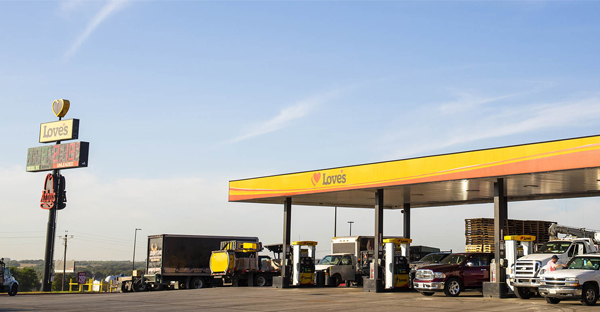
As the nation endures the Covid-19 pandemic, <a href="https://www.ttnews.com/articles/truck-stops-remain-open-pandemic-despite-hit-bottom-line">truck stops have been working to ensure that drivers have a helping hand</a>. Some truck stops like Iowa 80 have enforced measures to limit the Covid-19 spread while keeping the showers and restrooms open. Loves installed plexiglass at all its stores, restaurants, and truck registers. Petro has remained open and has packaged their convenience store foods in a way that prioritizes customer safety.
<h2></h2>
<img src="https://truckerpath.com/uploads/2020/05/b2.jpeg" alt="FMCSA" />
<h3><strong>FMCSA HOS Rule Updates</strong></h3>
The <a href="https://www.fmcsa.dot.gov/regulations/hours-service/hours-service-drivers-final-rule">Final Rule</a> features four key changes to existing Hours of Service requirements.
<ul>
<li>The Agency will increase safety and flexibility for the 30-minute break rule by requiring a break after 8 hours of consecutive driving and allowing the break to be satisfied by a driver using on-duty, not driving status, rather than off-duty status.</li>
<li>The Agency will modify the sleeper-berth exception to allow drivers to split their required 10 hours off duty into two periods: an 8/2 split, or a 7/3 split—with neither period counting against the driver’s 14‑hour driving window.</li>
<li>The Agency will modify the adverse driving conditions exception by extending by two hours the maximum window during which driving is permitted.</li>
<li>The Agency will change the short-haul exception available to certain commercial drivers by lengthening the drivers’ maximum on‑duty period from 12 to 14 hours and extending the distance limit within which the driver may operate from 100 air miles to 150 air miles.</li>
</ul>
<h3></h3>
<img src="https://truckerpath.com/uploads/2020/05/b3.jpeg" alt="Jobs" />
<h3><strong>More than 80,000 Jobs Lost Last April</strong></h3>
According to the<a href="https://www.bls.gov/news.release/empsit.t17.htm"> Bureau of Labor Statistics</a>, 88,300 jobs were lost in the trucking industry, a 6.2% year-over-year decline, as the entire economy continues to suffer due to the COVID-19 pandemic. It is estimated that around 60% of the jobs mentioned are drivers.
Fine Print and Hidden Costs in Freight Factoring [p]Be certain to review the fine print of freight contracts as sneaky freight factoring companies sometimes have hidden costs that are added to the advertised factoring rate.
[/p]
[h2] Freight Factoring - What some companies don't tell you [/h2]
[p]Factoring can be a great tool to streamline your cash flow and grow your business as it eliminates the wait to get paid for owner-operators. However, some factoring companies have contracts with complicated jargon and disclaimers hidden in the fine print. [/p]
[h2] Hidden Costs [/h2]
[p]Sometimes a factoring company will advertise a great rate, far lower than any competitor. It's a perfect scenario for you, right? Well, not exactly.
[/p]
[p]Those rates that seem too good to be true are typically just that. Although a low rate is optimal, the associated fees that you will incur in addition to the rate can balloon the overall cost for you to factor. [/p]
[video id="IBCMtru_QMQ"]
[h2] ACH Transfer Fee [/h2]
[p]ACH Transfer fees can be issued each time you factor and range from $10 to upwards of $25 depending on the type of transfer or deposit. This cost can surely add up over time and frankly, it's ridiculous for to you to pay a fee just to receive your money. [/p]
[h2] Minimum Volume Fee [/h2]
[p]Often times a factoring company will require you to commit to factoring a minimum volume of invoices. Failure to meet the agreed minimum amount can result in extra fees or a percentage surcharge. Take into account your typical invoice amounts and calculate if you will have an issue trying to meet the minimum requirements. Keep in mind not all factoring companies have this policy or fee. [/p]
[h2] Client's Credit Check Fee [/h2]
[p]Although your credit is not taken into account, your client's credit is. The creditworthiness of your client must meet a certain standard for certain factoring companies before they agree to factor your invoices. That's right, some companies will charge you a fee for that credit check. [/p]
[h2] Length of Terms [/h2]
[p]You might decide to factor for a variety of reasons. Unavoidable circumstances might arise making it difficult to cover your operational costs. Truck repairs are extremely costly and unpredictable at times, especially for owner-operators and having a reliable truck that is fully functional is essential to your business. If you run a small fleet, wages, insurance, and taxes further compound your expenses. [/p]
[p]This brings the length of terms to factor into play. Most factoring companies offer three to six-month term agreements to factor with some even require one-year contracts. It's important that you review and consider your options when considering the length of terms.[/p]
[p]Be sure to choose the best fit for you. If you're confident that you won't be factoring for an entire year or that you want to explore other options after a few months, you should consider factoring with a company that doesn't have a minimum length of terms agreement. [/p]
[h2] Termination Fee [/h2]
[p]Let's say you have been factoring with a company for six months now. You have received payment days after hauling a load and it's been beneficial in helping you generate cash quicker to cover your expenses. Now you have ample funds and decide that you don't need to factor for the next few months.[/p]
[p]The factoring company won't let you out of the contract because you agreed to factor for a certain length of time. In order for you to stop factoring, you have to pay a fee up to $1,000. [/p]
[p]That's ridiculous, right? [/p]
[giphy] <iframe src="https://giphy.com/embed/KE58LJF3k8jug" width="480" height="426" frameBorder="0" class="giphy-embed" allowFullScreen></iframe><p><a href="https://giphy.com/gifs/roger-KE58LJF3k8jug"> [/giphy]
[h2] Choosing a Freight Factoring Company [/h2]
[p]Before choosing to do business with a factoring company, you should take into account these potential hidden costs and fees in the fine print of a contract. Freight Factoring helps manage your trucking company's cash flow and takes the hassle away from client collections, allowing you to focus on growing your business and hauling more freight. [/p]
[p]You shouldn't feel that you are being fleeced by an unusual amount of fees that you weren't aware of or deal with. <strong>Trucker Path InstaPay</strong> is freight factoring that pays you in a day with no hidden costs, fees, minimum commitments or contracts with pages and pages of fine print to sift through. [/p]
[button text="LEARN ABOUT INSTAPAY" href="https://truckerpath.com/sign-up-instapay/?utm_source=blog&utm_medium=hiddenfeesAug1" width="250px"]
Industry Update - June 2, 2020 <h2></h2>
<h3></h3>
<a href="https://truckerpath.com/uploads/2020/06/b21.jpg"><img src="https://truckerpath.com/uploads/2020/06/b21-300x156.jpg" alt="" width="300" height="156" class="alignleft size-medium wp-image-4991" /></a>
<h3><strong>DOT to Distribute 2.1 Million Masks to Truckers</strong></h3>
The U.S. Department of Transportation will distribute around 2.1 million face masks to truck drivers. This is part of a larger initiative to distribute masks to transportation workers across the country.
“Transportation workers are on the frontlines of keeping our transportation systems operational during this public health emergency and their wellbeing and safety is paramount,” said Transportation Secretary Elaine Chao.
DOT announced that the masks will be sent out over the coming weeks through the U.S. Postal Service. The breakdown of masks by transportation sector is as follows:
<ul>
<li>Mass transit and passenger rail – 4.8 million</li>
<li>Aviation – 3.8 million</li>
<li>Maritime – 2.4 million</li>
<li>Freight rail – 2.2 million</li>
<li>Highway and motor carrier – 2.1 million</li>
<li>Pipeline systems – 258,000</li>
</ul>
For detailed distribution locations and current dates of distribution, please visit: <a href="http://www.fmcsa.dot.gov/masks">www.fmcsa.dot.gov/masks</a>
<h2></h2>
<h2></h2>
<a href="https://truckerpath.com/uploads/2020/06/b19.jpeg"><img src="https://truckerpath.com/uploads/2020/06/b19-300x156.jpeg" alt="" width="300" height="156" class="alignleft size-medium wp-image-4988" /></a>
<h3><strong>Volumes Now Up 10% vs Last Year</strong></h3>
<a href="https://www.freightwaves.com/news/volumes-fall-week-over-week-but-now-up-10-year-over-year">Outbound tender volumes are benefiting greatly from the reopening of the economy</a> and a release of pent-up consumer demand. Supply dynamics are taking longer to adjust and capacity remains loose. While rates are coming off a depressed base, spot rates have surged to $1.47 per mile and have increased in the vast majority of lanes.
<h2></h2>
Volumes should continue to be supported by most of the states reopening, continued plugging of the income gap by generous unemployment benefits and stimulus, auto plants reopening, and produce seasons kicking into gear.
<h2></h2>
<h2></h2>
<a href="https://truckerpath.com/uploads/2020/06/b20.jpeg"><img src="https://truckerpath.com/uploads/2020/06/b20-300x156.jpeg" alt="" width="300" height="156" class="alignleft size-medium wp-image-4989" /></a>
<h3><strong>Blinking Lights Cut Tanker-Truck-Crashes By Nearly 34%</strong></h3>
As part of their safety efforts, Groendyke Transport installed $150 blinking amber lights to the back of their tanker trucks. They reported a 33.7% drop in rear-end collisions over a 31-month period, according to company officials. In addition, there were zero rear-end collisions at railroad crossing during a test period of one year and seven months.
<h2></h2>
The Groendyke Transport fleet currently has 900 trailers with the lights after almost three years of testing and now has <a href="https://beta.regulations.gov/document/FMCSA-2018-0223-0036">permission from FMCSA</a> to use them.
<h2></h2>
The cost of the strobe and installation is about $150.
<h2></h2>
<h2></h2>
<h2></h2>
<h4>By Aldous Aldwin</h4>
<h3></h3>
<h3></h3>