Published July 27, 2026
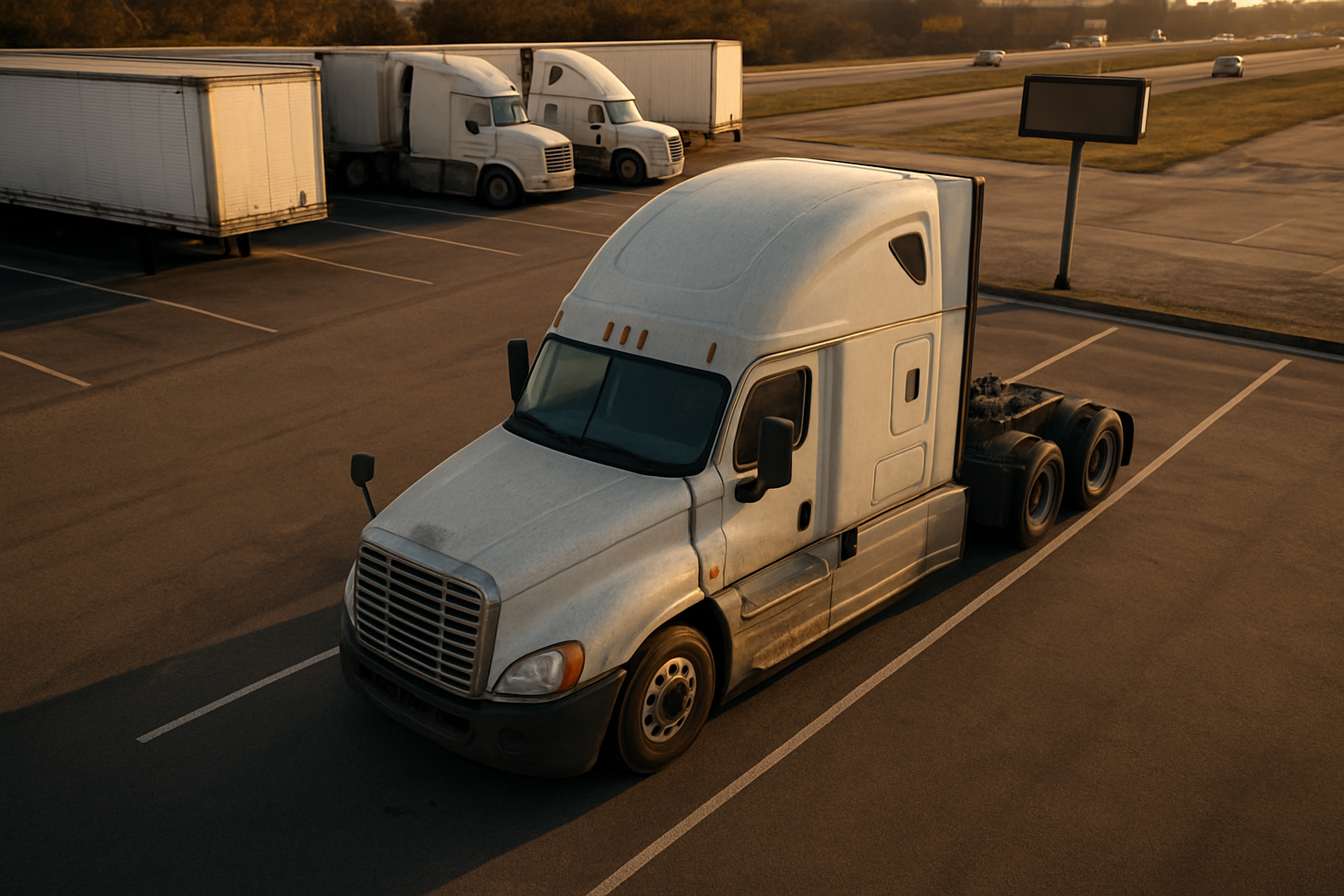
Georgia is adding 59 truck parking spaces across 2 projects on I-75 by 2026 — modest relief on one of the Southeast’s tightest freight corridors. The news is good, but 59 spaces will not flip this corridor into an easy night. Drivers running Georgia I-75 this week will still get more from earlier stop planning than from waiting on new capacity to show up.
How Do Drivers Rework a Georgia I-75 Stop Plan Right Now?
Start by assuming the new spaces will help, but not enough to change old habits overnight. When a state adds 59 spots across an entire interstate corridor, those spaces matter most for drivers who build a stop plan before the final hour starts shrinking. Truck parking ranked as the No. 2 critical issue in the trucking industry in both 2023 and 2024, according to ATRI — and I-75 through Georgia is exactly the kind of corridor that drives that ranking.
A practical move is to line up a primary stop and a backup before crossing into the busiest stretch. Most experienced drivers already do this on tight corridors, because the worst time to start hunting is when the clock is low and every lot on the board looks packed. Trucker Path shows live truck parking status — open, full, or closed — at stops along the route, so the picture updates in the afternoon when it still matters, not at the exit ramp when it is already too late.
It also helps to think in windows instead of a single destination. If the first planned stop fills early, having the next realistic option already in mind keeps the run calm and cuts down on last-minute wandering around exits that were never built for heavy truck traffic. A lot of drivers check parking status a couple of hours before shutdown, when there is still room to adjust the plan without pressure.
When 59 New Spaces Hit I-75, Will Georgia Truck Parking Get Easier?
Yes, but only in a limited way. The Georgia announcement covers 2 projects adding a combined 59 truck parking spaces on I-75, with a timeline tied to 2026. More room is coming — but not all at once, and not at the scale that removes pressure across the whole route.
New parking projects often sound bigger in a headline than they feel from behind the wheel, especially on a long freight corridor where demand can swallow added capacity fast. The smart read on this news is not “problem solved.” It is “a little more breathing room may be coming, so now is a good time to tighten up how the stop gets planned.” Some additions ease pressure at one stretch of interstate but do not change the next high-demand area much at all.
That is also where truck-safe routing matters beyond just getting to the stop. When a primary lot fills and a driver needs to move to a backup, the route between them has to work for a tractor-trailer. Trucker Path’s commercial routing keeps trucks off low bridges, weight-restricted roads, and exits that look fine on a passenger-car app but fall apart for a long combination. The backup stop only helps if the path there actually works.
Check Live Parking on Georgia I-75
What Usually Trips Drivers Up on This Corridor Before Parking Fills?
The biggest problem is not just a full lot. It is everything that happens right before that full lot: traffic slows the day down, weather changes the pace, and a stop that looked possible in the morning turns into a reach by late afternoon. That is where a lot of plans break apart on Georgia I-75 — a driver leaves too little cushion, hits congestion near Atlanta or Macon, and starts chasing parking farther than the clock comfortably allows.
Most experienced drivers handle this by checking the whole run, not just the stop itself. Real-time traffic and weather data along the route can flag a slow stretch early enough to move the parking decision up by an hour — which on a tight corridor is often the difference between a clean night and a stressful one. Trucker Path also shows live highway cameras so a driver can see what a stretch of road actually looks like before rolling into it, not just what a forecast says it should look like.
It also helps to avoid improvised detours onto roads that were never a good fit for a tractor-trailer. When parking gets scarce and a driver starts improvising, the route to the backup stop matters just as much as knowing the first stop is full. A truck-safe path to the next option is part of the plan, not an afterthought.
How Far Ahead Should Drivers Start Looking for Parking on Georgia I-75?
On a corridor with tight capacity, a lot of guys start checking options well before the final stretch of drive time. Once parking pressure ramps up, every late decision gets harder and every backup option gets weaker. That does not mean stopping too early every day — it means keeping enough cushion to react when a lot flips from open to full, traffic eats time, or weather changes the pace of the run.
Drivers who handle this well usually build the plan in layers: first stop if everything goes right, second stop if the day gets messy, and a clear truck-safe route between them so the whole evening does not depend on one parking lot working out. That is especially useful on Georgia I-75 right now, where this new parking news may cause some drivers to assume relief is already here.
The added spaces are good news. But the day-to-day parking fight on this corridor will still come down to timing — and checking a few hours early, not right at the exit, is where most of the margin lives.
Frequently Asked Questions
How many new truck parking spaces is Georgia adding on I-75?
Georgia announced 2 projects that will add a combined 59 truck parking spaces on I-75. The timeline in the announcement points to 2026, meaning those spaces are not all available yet as of this writing.
Will 59 new spaces fix parking problems on Georgia I-75?
Not by themselves. Those spaces will help, but I-75 is a high-pressure freight corridor and 59 spaces spread across 2 projects will not eliminate the parking crunch drivers already know. Most drivers will still need to plan stops early and keep a backup option in mind.
What is the most practical adjustment drivers should make after this news?
The biggest adjustment is timing. Checking live parking status a couple of hours before shutdown — rather than in the final stretch of available hours — gives drivers room to react before the best options are gone. Building a backup stop into the plan before the run starts is the other half of that habit.
When will the new Georgia I-75 truck parking spaces open?
The state announcement ties the projects to 2026, but the specific open dates for each location have not been confirmed publicly as of this writing. Until those spaces are in service, drivers will still be dealing with the same parking pressure they know today.
What tool helps drivers check parking before running Georgia I-75?
Trucker Path shows live truck parking status — open, full, or closed — alongside commercial routing, real-time traffic, weather, fuel prices, and live highway cameras in one app. That combination helps when a stop plan needs to change before a tight corridor gets worse.
Summary
- Georgia announced 2 I-75 truck parking projects adding a combined 59 spaces by 2026 — a real improvement, not a fix
- Truck parking ranked as the No. 2 critical issue in the trucking industry in both 2023 and 2024, per ATRI; I-75 in Georgia is one of the corridors that drives that ranking
- The added capacity matters most for drivers who already plan stops early — 59 spaces will not rescue a late decision on a high-demand corridor
- Traffic, weather, and truck-safe routing shape the parking decision as much as the lot itself; checking the full run, not just the stop, is what keeps the plan intact
- The best use of this news is practical: tighten up the stop plan before running Georgia I-75, not after the obvious spots fill
Plan Your Georgia I-75 Stop Now
Sources
Project timing and parking availability can change; conditions on the road may have shifted since this article was published on July 27, 2026.